




Annual
Subscribe for one year to access all your favourite downloads
500 / year
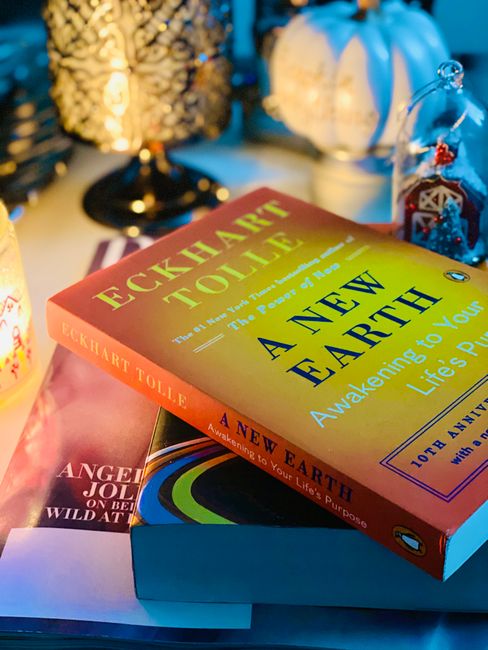

Consider the last time you felt truly at peace. Chances are, it was a moment when the relentless chatter in your head briefly subsided. For many, daily life is a frantic navigation between past mistakes and future worries, a state of mental agitation we’ve come to accept as normal. Eckhart Tolle’s landmark book, The Power of Now, posits that this internal noise is not just a nuisance; it’s the very source of our unhappiness. Born from Tolle’s own journey out of deep depression, the book serves as a guide to dismantling this mental prison and rediscovering the profound peace that exists only in the present moment.
Tolle identifies two core mechanisms that construct our internal suffering. Understanding them is the first step toward breaking free.
Tolle redefines the ego not as mere arrogance, but as the false, mind-made self. This identity is built from a collage of past experiences, labels, and future ambitions. It thrives on conflict, comparison, and the need to be right, constantly telling you stories about who you are and what you need. For example, when a minor disagreement escalates into a major fight, it’s often the ego defending its story at all costs. By learning to recognize this voice as an entity separate from your true self—the silent awareness behind it—you begin to reclaim your power.
Have you ever overreacted to a situation with an intensity that surprised even you? Tolle calls this the activation of the “pain-body.” He describes it as a semi-dormant energy field within us, composed of accumulated emotional pain from our past. This entity feeds on negativity and can be triggered by a stray comment or event, causing it to awaken and hijack our emotions. By bringing conscious, non-judgmental attention to this feeling when it arises, you can observe it without becoming it, effectively starving it of the negative energy it craves and dissolving its hold over you.
Taking the next step becomes straightforward when you have the right support — Become an Ultimate Master of your life is worth exploring.
Taking the next step becomes straightforward when you have the right support — Heal your past, design your future is worth exploring.
Tolle argues that the primary fuel for the ego and pain-body is “psychological time.” While we need “clock time” to schedule a meeting or cook dinner, psychological time is the mental addiction to the past and future. Regret, guilt, and resentment are diseases of the past. Anxiety, stress, and worry are diseases of the future. Life, however, is only ever happening in one place: Now. The book’s central thesis is that by withdrawing our attention from this illusory mental timeline and anchoring it firmly in the present, we escape the cycle of suffering.
The Power of Now is not just theory; it’s a manual for a new way of living, offering tangible techniques to access the present moment.

The core practice is to become a detached observer of your mind. Instead of being swept away by every thought and emotion, you step back and witness them. Imagine you are the vast, open sky and your thoughts are simply clouds passing through. You are not the clouds. This simple act of witnessing creates a gap in the stream of compulsive thinking, allowing a deeper stillness and intelligence to emerge.
A powerful and direct portal to the Now is through your physical body. The mind can travel to the past or future, but the body is always in the present. Tolle suggests bringing your focus to the feeling of aliveness within, what he calls the “inner body.” This can be as simple as feeling the warmth in your hands as you hold a cup of tea or the sensation of your feet on the ground as you walk. This practice instantly pulls your awareness out of your head and into the reality of the present moment.
Much of our stress comes from resisting the reality of the present moment. We wish things were different. Tolle advocates for “surrender,” which is not passive resignation but a wise and courageous acceptance of the current situation. When stuck in a traffic jam, instead of fuming with internal resistance, you can accept the reality of the moment. This inner “yes” aligns you with the flow of life, ending the internal conflict and allowing you to respond to the situation with clarity and peace rather than reactive anger.
More than two decades after its publication, The Power of Now continues to resonate because it addresses the fundamental ailment of the modern human condition: being lost in thought. It offers not a set of beliefs, but a set of tools to shift from a life dictated by mental patterns to one grounded in conscious presence. For anyone feeling overwhelmed by anxiety or disconnected from life, Tolle’s work provides a direct and transformative blueprint for finding joy, peace, and meaning not in some distant future, but right here, in the power of Now.

 The Power of Now Review: Lessons from Eckhart Tolle’s ClassicGeneral
 The Power of Now Review: Lessons on Presence & Ending SufferingGeneral
 Book Review: The Power of Now Summary & Key LessonsGeneral
 The Power of Now Review: Lessons on Presence & Inner PeaceGeneral
 The Self-Help De-Influence Movement: Beyond Toxic PositivityGeneral
 Kryon: Ancient Prophecy & Humanity’s Next Evolutionary StepGeneralThe Power of Now Review: Lessons from Eckhart Tolle’s ClassicGeneralThe Power of Now Review: Lessons on Presence & Ending SufferingGeneralBook Review: The Power of Now Summary & Key LessonsGeneralThe Power of Now Review: Lessons on Presence & Inner PeaceGeneral
Sign in without leaving this document. You will return here automatically.

The Ultimate Masters
https://www.ultimatemasters.org
Subscribe for one year to access all your favourite downloads
500 / year
Unlimited downloads forever
Unlimited downloads
Subscribe for one to access hundreds of downloads.
50 / month
Subscribe quarterly/per term
75 / month
The Ultimate Masters
https://www.ultimatemasters.org
Continue directly to this store’s secure WooCommerce checkout.
Earn direct and team commission with personal links, campaign creatives, discount coupons and transparent reporting.
0 responses on "The Power of Now Review: Lessons from Eckhart Tolle's Classic"