


Annual
Subscribe for one year to access all your favourite downloads
500 / year


In a world saturated with opinions, a well-crafted book review offers more than just a thumbs-up or thumbs-down. It’s an opportunity to engage with literature on a deeper level, to explore its nuances, and to share your insights with others. This guide explores how to move beyond superficial summaries and create reviews that truly resonate.
The foundation of a great review lies in active reading. Don’t just passively absorb the words; interrogate them. Consider, for example, how Toni Morrison uses language in “Beloved” to evoke the trauma of slavery. Or how J.R.R. Tolkien builds an entire world, complete with its own languages and histories, in “The Lord of the Rings.” Ask yourself: What choices did the author make, and why? How do these choices impact the reader’s experience? Pay attention to recurring motifs, symbolic imagery, and the overall rhythm of the prose. A historical fiction piece should be evaluated for accuracy and how well it portrays the time period, while a fantasy novel should be judged by the consistency and originality of its world-building.
A compelling book review goes beyond mere opinion. It provides readers with a roadmap to understanding the book’s strengths, weaknesses, and overall impact.

Start strong. Instead of a generic introduction, try a captivating hook. For example, instead of saying “This book is about…” try, “Imagine a world where…” or, “[Quote from the book] – this line perfectly encapsulates the novel’s central theme…” The goal is to immediately draw the reader into your review and make them want to learn more.
Offer relevant context. Is the author a debut novelist or a literary giant? Does the book build upon previous works or explore a new direction? Consider the author’s background and any relevant influences. For example, knowing that Gabriel Garcia Marquez drew inspiration from his own childhood in Colombia enriches one’s understanding of “One Hundred Years of Solitude.”
Go beyond plot summary and delve into the book’s themes. What are the underlying messages? What does the book say about love, loss, identity, or society? Support your interpretations with specific examples from the text. For instance, in “The Great Gatsby,” explore how Fitzgerald uses the green light as a symbol of unattainable dreams.
Offer a balanced critique. Acknowledge the book’s strengths, but also point out its weaknesses. Be specific and provide evidence to support your claims. Did the pacing lag in the middle? Were the characters underdeveloped? Was the ending unsatisfying? Be fair and objective in your assessment.

Consider the target audience. Who would enjoy this book? Who might find it challenging or offensive? Is it a good fit for young adults, seasoned readers, or fans of a specific genre? Helping readers identify whether a book aligns with their interests is invaluable.
Your writing style should be clear, concise, and engaging. Avoid jargon and overly complex language. Maintain a professional and respectful tone, even when expressing criticism. Let your personality shine through, but avoid making the review about yourself. The focus should always be on the book.
| Element | Effective Review | Ineffective Review |
|---|---|---|
| Objectivity | Acknowledges both the book’s merits and flaws, providing specific examples. | Presents a one-sided view, either excessively praising or harshly criticizing without justification. |
| Analysis | Explores the deeper themes and symbolism, connecting them to broader ideas. | Simply recounts the plot events without offering any insightful interpretation. |
| Evidence | Quotes relevant passages from the book to support claims and interpretations. | Makes generalizations without providing any textual evidence. |
| Clarity | Uses precise language and avoids ambiguity, ensuring the reader understands the reviewer’s points. | Employs vague language and convoluted sentences, leaving the reader confused about the reviewer’s opinion. |
If you want a practical next step, you can also check out Heal your past, design your future.
If you want a practical next step, you can also check out Become an Ultimate Master of your life.

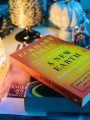 The Power of Now Review: Lessons from Eckhart Tolle’s ClassicGeneral
 The Power of Now Review: Lessons on Presence & Ending SufferingGeneral
 Book Review: The Power of Now Summary & Key LessonsGeneral
 The Power of Now Review: Lessons on Presence & Inner PeaceGeneral
 The Self-Help De-Influence Movement: Beyond Toxic PositivityGeneral
 Kryon: Ancient Prophecy & Humanity’s Next Evolutionary StepGeneralThe Power of Now Review: Lessons from Eckhart Tolle’s ClassicGeneralThe Power of Now Review: Lessons on Presence & Ending SufferingGeneralBook Review: The Power of Now Summary & Key LessonsGeneralThe Power of Now Review: Lessons on Presence & Inner PeaceGeneral
Sign in without leaving this document. You will return here automatically.

The Ultimate Masters
https://www.ultimatemasters.org
Subscribe for one year to access all your favourite downloads
500 / year
Unlimited downloads forever
Unlimited downloads
Subscribe for one to access hundreds of downloads.
50 / month
Subscribe quarterly/per term
75 / month
The Ultimate Masters
https://www.ultimatemasters.org
Continue directly to this store’s secure WooCommerce checkout.
Earn direct and team commission with personal links, campaign creatives, discount coupons and transparent reporting.
1 responses on "The Art of Book Reviewing: Beyond Plot Summaries and Star Ratings"