


Annual
Subscribe for one year to access all your favourite downloads
500 / year
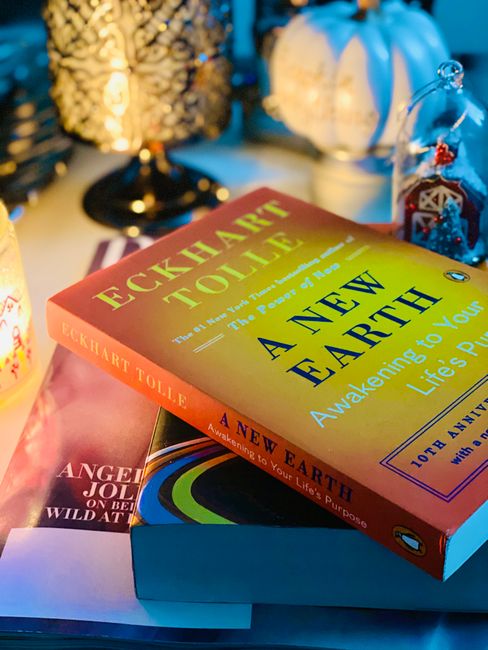

Have you ever felt like you have a relentless roommate living inside your head? This inner voice constantly replays past mistakes and rehearses future anxieties, leaving little room for peace. Eckhart Tolle’s seminal work, The Power of Now, identifies this phenomenon as the core of human dissatisfaction. The problem isn’t the world around us, but our compulsive identification with this stream of thought. We become so entangled in the mind’s narrative—a story perpetually focused on what was or what might be—that we miss our lives as they unfold. Tolle argues that this obsession with ‘psychological time’ is an illusion that robs us of the only reality we ever have: the present moment.
Beyond the daily chatter, many of us carry a deeper reservoir of old, unresolved emotion. Tolle gives this a name: the ‘pain-body.’ Think of it as a dormant volcano of past hurts, disappointments, and anger. While often inactive, certain events or comments can trigger an eruption. When the pain-body is active, it hijacks your perception, colors your thoughts with negativity, and seeks out conflict to feed itself. It’s the reason a minor annoyance can spiral into a major emotional meltdown. Recognizing this entity as a collection of old energy, rather than your true self, is the first step toward disarming it. The goal isn’t to fight it, but to observe it with awareness, which starves it of the attention it needs to survive.
Tolle’s philosophy is not abstract; it is a set of practical tools designed to break the cycle of compulsive thinking and ground you in the now. Integrating these into your daily life can create profound shifts in your state of being.
For those looking to take the next step, Heal your past, design your future is a resource worth exploring.
For those looking to take the next step, Become an Ultimate Master of your life is a resource worth exploring.
The foundational practice is to cultivate a sense of being the observer of your thoughts. Imagine you are standing on a riverbank watching leaves (your thoughts) float by. You don’t jump into the river to grab them or try to alter their course. You simply watch. By creating this internal distance, you realize you are not your thoughts, but the silent awareness behind them. This simple act of witnessing breaks the spell of identification and is the gateway to inner stillness.
Much of our suffering stems from an internal ‘no’ to what is already happening. We argue with reality, wishing a situation were different. Tolle calls the antidote to this ‘surrender’—not in the sense of giving up, but of accepting the present moment unconditionally. If you are stuck in traffic, for instance, resisting the reality of the situation only creates anger and stress. Acceptance means acknowledging, ‘I am in traffic right now.’ From this place of inner peace, you can then take whatever practical action is necessary, free from the turmoil of negative reactivity.
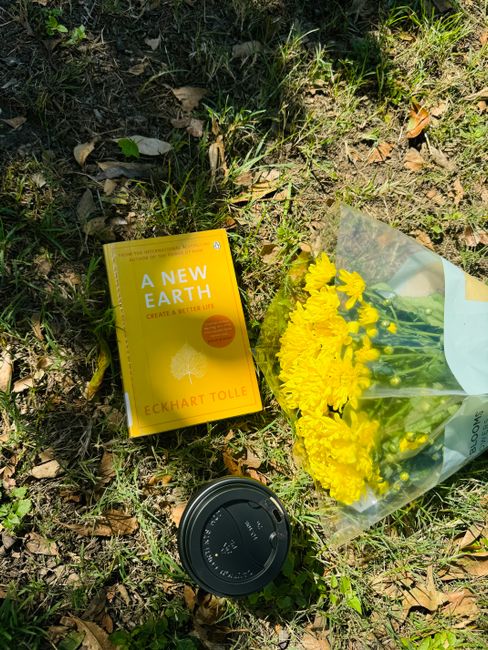
When the mind becomes a storm of thoughts, a powerful way to find calm is to bring your attention into your body. This is a direct portal to the present moment. Feel the life energy inside your hands. Notice the sensation of your feet on the ground or your body sitting in a chair. Your body exists only in the Now. By focusing on these tangible, physical sensations, you pull your awareness away from the abstract world of thought and anchor it firmly in the reality of the present.
While the concepts are simple, the practice can be challenging. Here are some common hurdles and how to approach them:
The journey outlined in The Power of Now is not about achieving a distant, future goal of enlightenment. It is about a radical shift in perspective that is accessible at any given moment. By learning to observe your mind, accept the present, and connect with your body, you can begin to untangle yourself from the patterns of thought that cause suffering. It is a continuous practice of returning, again and again, to the profound peace and power found only in the Now.

 The Power of Now Review: Lessons from Eckhart Tolle’s ClassicGeneral
 The Power of Now Review: Lessons on Presence & Ending SufferingGeneral
 Book Review: The Power of Now Summary & Key LessonsGeneral
 The Power of Now Review: Lessons on Presence & Inner PeaceGeneral
 The Self-Help De-Influence Movement: Beyond Toxic PositivityGeneral
 Kryon: Ancient Prophecy & Humanity’s Next Evolutionary StepGeneralThe Power of Now Review: Lessons from Eckhart Tolle’s ClassicGeneralThe Power of Now Review: Lessons on Presence & Ending SufferingGeneralBook Review: The Power of Now Summary & Key LessonsGeneralThe Power of Now Review: Lessons on Presence & Inner PeaceGeneral
Sign in without leaving this document. You will return here automatically.

The Ultimate Masters
https://www.ultimatemasters.org
Subscribe for one year to access all your favourite downloads
500 / year
Unlimited downloads forever
Unlimited downloads
Subscribe for one to access hundreds of downloads.
50 / month
Subscribe quarterly/per term
75 / month
The Ultimate Masters
https://www.ultimatemasters.org
Continue directly to this store’s secure WooCommerce checkout.
Earn direct and team commission with personal links, campaign creatives, discount coupons and transparent reporting.
0 responses on "The Power of Now Book Review: Lessons from Eckhart Tolle"