


Annual
Subscribe for one year to access all your favourite downloads
500 / year
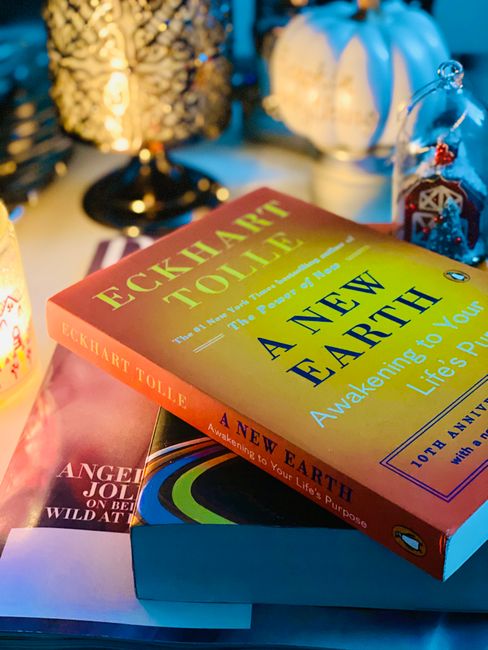

Consider a typical moment: you’re trying to focus on a task, but your mind is a browser with too many tabs open. One tab replays a clumsy comment from this morning’s meeting. Another endlessly refreshes a list of future worries—bills, deadlines, what-ifs. A third is busy judging your current performance. This state of perpetual mental distraction isn’t just tiring; it’s the source of much of our anxiety and dissatisfaction. In his seminal work, The Power of Now, Eckhart Tolle argues that we have become prisoners of our own minds. He offers not a complicated philosophy, but a direct and radical escape route: awakening to the present moment.
Tolle’s insights stem from his own journey. A former academic plagued by intense depression, he experienced a spontaneous spiritual awakening that silenced his inner turmoil. His book is a manual for navigating this transformation, moving from a life dominated by thought to one grounded in conscious awareness.
Tolle’s core diagnosis is that humanity is addicted to what he calls “psychological time.” We use “clock time” to schedule our day, but we live in psychological time—a non-stop mental movie reel of past regrets and future fears. This is the prison.
Who is the prisoner? Tolle identifies it as the ‘ego’—a phantom self constructed from our personal history, our beliefs, and our identification with thought. This egoic self is a storyteller that feels most real when it’s lamenting the past (“If only I had…”) or dreading the future (“What if this happens?”). It cannot exist in the simple, unadorned reality of the present moment. For example, the anxiety you feel about an upcoming presentation isn’t caused by the presentation itself (which doesn’t exist yet), but by the ego’s future-based story about potential failure.
Taking the next step becomes straightforward when you have the right support — Heal your past, design your future is worth exploring.
Taking the next step becomes straightforward when you have the right support — Become an Ultimate Master of your life is worth exploring.
Why do we sometimes overreact so dramatically to minor events? A casual remark can send us into a spiral of anger or despair. Tolle introduces the concept of the “pain-body” to explain this. He describes it as a lingering field of old, accumulated emotional pain that resides in every individual.
“The pain-body is a semi-autonomous energy form… it is an addiction to unhappiness.”
Think of it as an emotional parasite that lies dormant until a trigger—a word, a memory, an event—awakens it. Once active, it takes over your mind, generating negative thoughts that match its own frequency. It wants to feed on more pain. Recognizing this entity when it arises, without identifying with it, is the key to dissolving its power. You observe the anger or sadness within you as the pain-body, not as who you truly are.
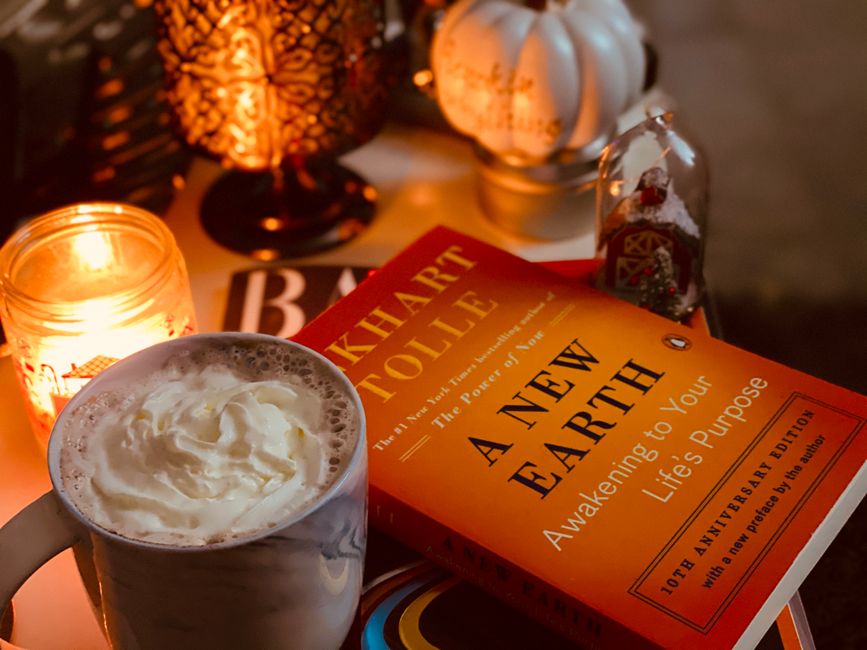
The Power of Now is fundamentally a ‘how-to’ guide. Tolle offers several practical methods to break the cycle of compulsive thinking and anchor yourself in the present. These are not complex rituals, but simple shifts in attention.
The first step is to create separation from your thoughts. Tolle instructs us to become a “watcher” or a silent witness to the mind’s activity. Instead of being swept away by the river of thoughts, you stand on the bank and observe it flow by. You notice the thought, “I’m going to fail,” but you don’t become it. This act of witnessing creates a space of calm awareness, proving that you are not your mind, but the consciousness that is aware of it.
Much of our suffering comes from resisting reality. We argue with what has already happened or what is happening now. Stuck in traffic? You can either resist it, generating stress and anger, or you can surrender to the fact that you are in a traffic jam. Tolle’s concept of ‘surrender’ isn’t passive resignation; it’s an intelligent and peaceful acceptance of the present moment’s unchangeable reality. From this place of acceptance, any necessary action can be taken with clarity and calm, rather than reactive negativity.
In a world that pulls our attention outward—to screens, tasks, and endless information—Tolle’s most direct gateway to the Now is through the body. The mind can travel to the past or future, but the body is always, unequivocally, here and now. The practice involves bringing your attention inward. Feel the aliveness in your hands, the subtle energy in your feet, the rhythm of your breath. This simple act of feeling your ‘inner body’ instantly pulls your consciousness out of the chaotic stream of thought and grounds you firmly in the present.
Decades after its initial publication, The Power of Now feels more relevant than ever. In an age of digital distraction and chronic anxiety, its message is not about rejecting the modern world but about finding a sanctuary of peace within it. It’s for anyone who feels that their thoughts are controlling them, rather than the other way around. By offering a direct path to experiencing the peace that lies just beneath the surface of mental noise, Eckhart Tolle provides a timeless guide to reclaiming your life, one present moment at a time.

 Man’s Search for Meaning Review: Frankl’s Lessons on SufferingGeneral
 The Power of Now Review: Summary, Lessons & Core MessageGeneral
 The Power of Now Review: Lessons from Eckhart Tolle’s GuideGeneral
 Book Review: The Prophet by Kahlil Gibran — Summary & LessonsGeneral
 The Biology of Belief Review: Key Lessons & SummaryGeneral
 Book Review: Breaking the Habit of Being Yourself by Dr. Joe DispenzaGeneral
 Book Review: Breaking the Habit of Being Yourself by Joe DispenzaGeneral
 The Power of Now Book Review: Lessons from Eckhart TolleGeneral
 The Power of Now Review: Lessons & Summary of Tolle’s ClassicGeneral
 The Power of Now Review: Summary, Lessons & Why It Still MattersGeneralMan’s Search for Meaning Review: Frankl’s Lessons on SufferingGeneralThe Power of Now Review: Summary, Lessons & Core MessageGeneralThe Power of Now Review: Lessons from Eckhart Tolle’s GuideGeneralBook Review: The Prophet by Kahlil Gibran — Summary & LessonsGeneralThe Biology of Belief Review: Key Lessons & SummaryGeneral
Sign in without leaving this document. You will return here automatically.

The Ultimate Masters
https://www.ultimatemasters.org
Subscribe for one year to access all your favourite downloads
500 / year
Unlimited downloads forever
Unlimited downloads
Subscribe for one to access hundreds of downloads.
50 / month
Subscribe quarterly/per term
75 / month
The Ultimate Masters
https://www.ultimatemasters.org
Continue directly to this store’s secure WooCommerce checkout.
Earn direct and team commission with personal links, campaign creatives, discount coupons and transparent reporting.
0 responses on "Book Review: The Power of Now by Eckhart Tolle - Summary & Lessons"