




Annual
Subscribe for one year to access all your favourite downloads
500 / year
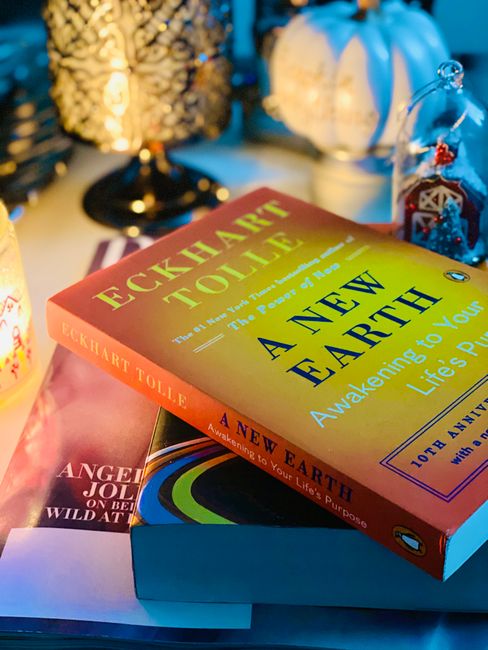

In a world of constant notifications and endless to-do lists, our minds have become noisy, cluttered spaces. We endlessly cycle through past regrets and future anxieties, a state of mental agitation so common it feels normal. Eckhart Tolle’s groundbreaking book, The Power of Now, serves as a manual for silencing this internal noise. It argues that our chronic unhappiness stems not from our circumstances, but from a profound disconnection from the only moment that is ever real: the present. This guide reframes Tolle’s core philosophy as a practical toolkit for anyone seeking to escape the prison of their own thoughts and find peace in the here and now.
Tolle’s primary diagnosis for human suffering is our over-identification with the thinking mind. This creates a false self, the ‘ego,’ which thrives on a fabricated timeline of past and future, effectively ignoring the present. The ego is the storyteller in your head, constantly narrating a life of problems, grievances, and desires. It sustains itself by projecting your identity into what you’ve done or what you will achieve, leaving you perpetually dissatisfied with what simply ‘is’.
Taking the next step becomes straightforward when you have the right support — Heal your past, design your future is worth exploring.
Taking the next step becomes straightforward when you have the right support — Become an Ultimate Master of your life is worth exploring.
Consider the common experience of worrying about an upcoming work meeting. The ego constructs a narrative of potential failure based on past mistakes (‘psychological past’) and then generates anxiety about future judgment (‘psychological future’). Tolle argues this entire drama is a mental illusion. By distinguishing this ‘psychological time’ from ‘clock time’—the practical tool for setting the meeting—we can see our anxiety for what it is: a product of the mind, not a reflection of reality. The first step toward peace is recognizing that the voice narrating your fears is not you.
Why do we sometimes have disproportionately strong emotional reactions to minor events? Tolle introduces the concept of the ‘pain-body’ to explain this phenomenon. It is an energetic field within us, composed of the accumulated, unprocessed emotional pain from our entire lives. This dormant entity awakens when triggered by an event that resonates with an old wound.
Imagine a casual remark from a friend is interpreted as a deep personal slight, sparking intense anger or sadness. This is often the pain-body taking over. It feeds on negativity and seeks to create more of it, hijacking your thoughts and words to generate drama. The key to dissolving the pain-body is not to fight it, but to observe it with detached awareness. By noticing it arise—’Ah, the pain-body is active now’—you cut its fuel supply. You see it as an impersonal energy pattern rather than your identity, and through this conscious presence, its power diminishes over time.
Tolle’s philosophy is not merely theoretical; it is rooted in actionable practices designed to pull your awareness away from the chaotic mind and anchor it in the present moment. Here are three foundational techniques:

The Power of Now delivers a transformative message: peace is not a destination to be reached in the future, but a state to be discovered in the present. By learning to disidentify from the egoic mind, observe our emotional patterns without judgment, and anchor ourselves in the tangible reality of the moment, we can fundamentally shift our experience of life. It is a guide to reclaiming our own awareness and discovering that everything we seek is already available in the profound, simple stillness of the Now.

 Book Review: The Power of Now by Eckhart Tolle — Summary & LessonsGeneral
 The Power of Now Review: Lessons from Eckhart Tolle’s ClassicGeneral
 The Power of Now Review: Lessons on Presence & The Pain-BodyGeneral
 The Biology of Belief Review: Lipton’s Key Lessons & SummaryGeneral
 The Celestine Prophecy Review: Lessons & Why It Still MattersGeneral
 The Body Keeps the Score Review: Lessons on Trauma & HealingGeneral
 Man’s Search for Meaning Review: Frankl’s Lessons on SufferingGeneral
 Man’s Search for Meaning Review: Frankl’s Lessons on SufferingGeneral
 Becoming Supernatural Review: Key Lessons from Joe DispenzaGeneral
 Book Review: Breaking the Habit of Being Yourself by Joe DispenzaGeneralBook Review: The Power of Now by Eckhart Tolle — Summary & LessonsGeneralThe Power of Now Review: Lessons from Eckhart Tolle’s ClassicGeneralThe Power of Now Review: Lessons on Presence & The Pain-BodyGeneralThe Biology of Belief Review: Lipton’s Key Lessons & SummaryGeneralThe Celestine Prophecy Review: Lessons & Why It Still MattersGeneral
Sign in without leaving this document. You will return here automatically.

The Ultimate Masters
https://www.ultimatemasters.org
Subscribe for one year to access all your favourite downloads
500 / year
Unlimited downloads forever
Unlimited downloads
Subscribe for one to access hundreds of downloads.
50 / month
Subscribe quarterly/per term
75 / month
The Ultimate Masters
https://www.ultimatemasters.org
Continue directly to this store’s secure WooCommerce checkout.
Earn direct and team commission with personal links, campaign creatives, discount coupons and transparent reporting.
0 responses on "Book Review: The Power of Now by Eckhart Tolle — Summary & Lessons"