




Annual
Subscribe for one year to access all your favourite downloads
500 / year
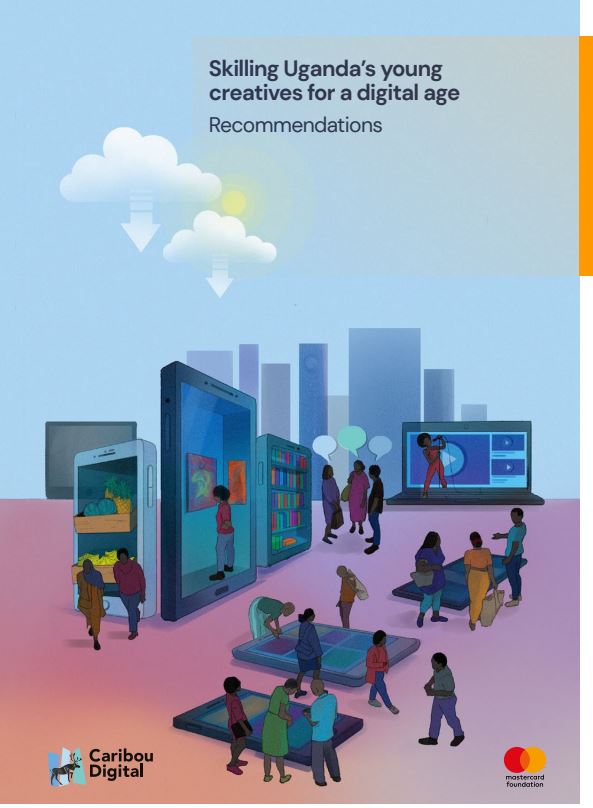

This report, the third in a series, offers recommendations for improving digital skills training among young creatives in Uganda’s culture and creative industries (CCIs). Based on research involving interviews with young creatives and industry experts, the recommendations emphasize the need for a more comprehensive and collaborative skills ecosystem. This includes increasing access to digital skills training, providing more spaces for practical application and peer-to-peer learning, and securing more funding for training initiatives. The report also highlights challenges faced by Ugandan creatives, such as limited access to resources and funding, outdated training models, and the need for locally relevant content. Finally, the authors suggest further research to address knowledge gaps within the sector.
Young creatives in Uganda face a multitude of challenges. While digital platforms offer new opportunities for reaching audiences and monetizing their work, they also bring pressures such as constant content creation and relentless audience criticism. Furthermore, there is a disconnect between formal education and the practical skills needed to thrive in a digital environment. Many creatives also struggle with limited access to resources, mentorship, and supportive spaces for collaboration and skill development. They often lack business acumen, management skills, and knowledge of intellectual property rights, which is compounded by inconsistent government support, restrictive laws, and income insecurity. For women in particular, there are additional gender-based discrimination challenges.
Young creatives recognize the value of digital skills like digital marketing, graphic design, and platform-specific knowledge. However, they also express a need for more advanced digital skills, such as coding, understanding algorithms, and optimizing platform usage. Non-digital skills, including business and financial management, project management, intellectual property knowledge, and negotiation, are equally crucial for establishing sustainable careers. A holistic approach to skilling is needed that encompasses both technical and soft skills relevant to the entire creative process, from production to marketing and sales.
Current skilling initiatives often operate in isolation, with a lack of cohesion and collaboration. There is a need for a unified effort that includes formal education, experienced industry mentors, and peer-to-peer learning opportunities. These initiatives should move beyond theory to practical, locally contextualized training that is relevant to the Ugandan experience. They also need to acknowledge that content available online is often not tailored to the African context and be geared toward the practical, lived realities of Ugandan creatives. Access to physical spaces for practice, collaboration and peer learning is also essential. Finally, these initiatives must be financially accessible, as many creatives cannot afford training costs.
The lack of spaces for creatives to practice their craft hinders their development. Creatives need spaces such as art centers, galleries, studios, and theatres to refine their skills, collaborate, and experiment. These spaces facilitate peer learning, provide a sense of community, and offer opportunities to immerse oneself in creative projects. In addition, having work displayed or performed in public spaces is important for visibility and recognition.
Peer-to-peer learning and mentorship are highly valued by young Ugandan creatives, who often feel that learning from peers with similar experiences and cultural contexts is more relevant than generalized or Western-centric content. They seek guidance from established Ugandan creatives who have achieved success, believing that mentors can provide more relevant and relatable advice. This is best achieved through masterclasses, regular meetings, and workshops facilitated both online and offline.
Government support is critical, including allocated funding for skills development initiatives and the establishment of a dedicated ministry for CCIs. Development partners must offer flexible funding options that allow creatives and industry actors the freedom to be creative rather than focusing on rigid agendas. Industry actors, such as training providers, should collaborate with government, development partners, and educational institutions to create collaborative skilling initiatives that address current skills gaps. All must collect and update data on CCIs to better inform policy and action in the sector. All actors need to work to empower young female creatives specifically, given the challenges they face.
Digital platforms offer numerous opportunities for Ugandan creatives to market their work, connect with audiences, and generate income. However, platforms themselves should invest in platform-led training to help users navigate constant changes, such as algorithms, search engine optimization, and ad programs. This will empower users of these platforms to become more adept digital producers. This training also provides transferable skills that can benefit users beyond just one platform.
To ensure long-term sustainability, there needs to be a collaborative approach that includes mapping skilling opportunities across the entire creative value chain. This involves identifying the strongest areas for skills provision and matching those with the needs of creatives. Investment in sector-specific research is also needed to address emerging technologies, assess earnings potential across different sectors, understand how to foster meaningful work, and support creatives with disabilities. Regular dialogue and collaboration through conferences and networking events will also foster partnerships between stakeholders. Additionally, there needs to be investment in domestic markets by launching national campaigns to encourage appreciation for and consumption of Ugandan creative content as well as considering recommendations by the African Union for CCIs.
Answer Key
Essay Questions
Glossary of Key Terms

 The Emotional Engine of BookTok: How Tears Built an EmpireGeneral
 The BookTok Effect: Why Crying on Camera Sells More Books Than a ReviewGeneral
 The Soul of BookTok: Identity, Emotion, and CommunityGeneral
 BookTok’s Power: How It Rewrites Publishing & Reader PsychologyGeneral
 The Emotional Engine of BookTok: Why We Cry & What It SellsGeneral
 The Emotional Engine of BookTok: Why Crying Sells BooksGeneral
 The BookTok Effect: How TikTok Redefined Reading CultureGeneral
 The Emotional Engine of BookTok: Why We Cry, Buy, and ConnectGeneral
 The Emotional Algorithm: A BookTok Review of Our Inner WorldsGeneral
 BookTok: How a TikTok Hashtag Rewrote the Rules of PublishingGeneralThe Emotional Engine of BookTok: How Tears Built an EmpireGeneralThe BookTok Effect: Why Crying on Camera Sells More Books Than a ReviewGeneralThe Soul of BookTok: Identity, Emotion, and CommunityGeneralBookTok’s Power: How It Rewrites Publishing & Reader PsychologyGeneralThe Emotional Engine of BookTok: Why We Cry & What It SellsGeneral
Sign in without leaving this document. You will return here automatically.

The Ultimate Masters
https://www.ultimatemasters.org
Subscribe for one year to access all your favourite downloads
500 / year
Unlimited downloads forever
Unlimited downloads
Subscribe for one to access hundreds of downloads.
50 / month
Subscribe quarterly/per term
75 / month
The Ultimate Masters
https://www.ultimatemasters.org
Continue directly to this store’s secure WooCommerce checkout.
Earn direct and team commission with personal links, campaign creatives, discount coupons and transparent reporting.
0 responses on "Skilling Uganda's Young Creatives for a Digital Age: Recommendations and Insights"