
Annual
Subscribe for one year to access all your favourite downloads
500 / year
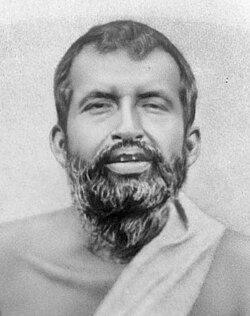

Paramahansa Yogananda was more than a spiritual teacher; he was a cultural and spiritual architect who engineered a robust bridge between the ancient contemplative traditions of India and the pragmatic, fast-paced mindset of the 20th-century West. Arriving in America in 1920, he didn’t simply preach dogma but presented a compelling case for inner exploration as a scientific endeavor. He framed the quest for God not as a matter of belief, but as a systematic methodology for expanding human consciousness, making timeless wisdom accessible and relevant to a new era.
Born Mukunda Lal Ghosh in northern India, Yogananda’s early life was characterized by an unquenchable thirst for direct experience of the Divine. This intense longing led him not to a life of secluded Himalayan retreat, but to the feet of his master, Swami Sri Yukteswar Giri. The decade of rigorous training that followed was less about personal salvation and more about being meticulously prepared for a world mission. Under Sri Yukteswar’s guidance, Yogananda was molded into a messenger capable of transmitting the profound subtleties of yoga with both spiritual authority and intellectual clarity, equipping him to meet the skepticism and curiosity of the Western world head-on.
Yogananda’s genius lay in his ability to translate esoteric concepts into practical, actionable techniques. He presented the inner journey as a science with observable principles and repeatable results, an approach that resonated deeply with his American audience.
For those looking to take the next step, Become an Ultimate Master of your life is a resource worth exploring.
For those looking to take the next step, Heal your past, design your future is a resource worth exploring.
Central to his message was the ancient science of Kriya Yoga, a meditation technique he introduced as a ‘jet-airplane route’ to higher consciousness. He explained that by using a specific psycho-physiological method to regulate the breath and life energy (prana), a practitioner could directly calm the ceaseless activity of the mind and nervous system. This stillness, he taught, was the prerequisite for experiencing one’s true nature as soul. It was a technology of self-realization, a tool for accelerating the natural course of human evolution.
Yogananda saw the world’s great religions not as competing belief systems but as different expressions of the same universal truths. He dedicated immense effort to revealing the shared essence of the Hindu Bhagavad Gita and the Christian Bible, demonstrating that the original teachings of Krishna and Christ outlined the same path of inner communion with Spirit. He taught his students to look past external rituals and doctrines to find the unifying ‘source code’ of divine law that underpins all authentic spiritual paths.
Understanding that a message requires a durable vehicle, Yogananda meticulously built an infrastructure to preserve and disseminate his teachings for future generations. This legacy stands on two foundational pillars:
 The Power of Now Review: Lessons from Eckhart Tolle’s ClassicGeneral
 The Power of Now Review: Lessons on Presence & Ending SufferingGeneral
 Book Review: The Power of Now Summary & Key LessonsGeneral
 The Power of Now Review: Lessons on Presence & Inner PeaceGeneral
 The Self-Help De-Influence Movement: Beyond Toxic PositivityGeneral
 Kryon: Ancient Prophecy & Humanity’s Next Evolutionary StepGeneralThe Power of Now Review: Lessons from Eckhart Tolle’s ClassicGeneralThe Power of Now Review: Lessons on Presence & Ending SufferingGeneralBook Review: The Power of Now Summary & Key LessonsGeneralThe Power of Now Review: Lessons on Presence & Inner PeaceGeneral
Sign in without leaving this document. You will return here automatically.

The Ultimate Masters
https://www.ultimatemasters.org
Subscribe for one year to access all your favourite downloads
500 / year
Unlimited downloads forever
Unlimited downloads
Subscribe for one to access hundreds of downloads.
50 / month
Subscribe quarterly/per term
75 / month
The Ultimate Masters
https://www.ultimatemasters.org
Continue directly to this store’s secure WooCommerce checkout.
Earn direct and team commission with personal links, campaign creatives, discount coupons and transparent reporting.
1 responses on "Paramahansa Yogananda: Life, Teachings & Spiritual Legacy"