


Annual
Subscribe for one year to access all your favourite downloads
500 / year

Spiritual journeys are often depicted as long, arduous paths requiring years of study, rigorous discipline, or the guidance of a master. The life of Ramana Maharshi presents a radical alternative. Born Venkataraman Iyer in 1879, he was an ordinary schoolboy with no inclination towards asceticism. Yet, at sixteen, a sudden, overwhelming fear of death catalyzed not a panic attack, but a profound, spontaneous investigation. Lying down and stilling his body, he mimicked the process of dying to confront the question directly: What dies? He viscerally understood that while the body perishes, the conscious awareness observing it—the true ‘I’—is eternal and untouched. This was not a conclusion reached through philosophy, but a direct, lived experience. This event stands as a testament to his core principle: enlightenment is not a distant goal to be achieved, but a present reality to be uncovered, accessible to anyone willing to look deeply within.
At the heart of Ramana’s legacy is the practice of Atma-vichara, or Self-inquiry, distilled into the pivotal question, ‘Who am I?’. He taught that this was not a mantra to be repeated, but a surgical tool for dismantling the ego. The method is deceptively simple. When any thought, feeling, or perception arises, the practitioner is instructed to ask, ‘To whom does this appear?’. The inevitable answer is, ‘To me.’ The inquiry must then be relentlessly turned upon this ‘me’: ‘Who am I?’.
For those looking to take the next step, Heal your past, design your future is a resource worth exploring.
For those looking to take the next step, Become an Ultimate Master of your life is a resource worth exploring.
This technique functions as a powerful reversal of the mind’s habitual outward flow. Instead of chasing thoughts and getting lost in the stories they create, the attention is continually redirected to its very source. Ramana explained that the mind is nothing but a bundle of thoughts, with the ‘I’-thought being the root. By focusing intently on this root, its illusory nature is exposed, and it dissolves back into its source, which he called the Heart or the Self. This is the direct path: not analyzing the content of the mind, but dissolving the very entity that claims ownership of it.
Drawn by an inner call after his awakening, Ramana made his way to the sacred mountain of Arunachala, which he never left. There, his state of profound absorption in the Self became his primary teaching. For years, he barely spoke, yet seekers from around the world were drawn to his palpable peace. He consistently maintained that silence was his most potent instruction. This was not an empty quiet, but a vibrant stillness charged with a presence that could calm the minds of those who sat with him. This silent transmission, or Satsang, offered a direct experience of the goal itself. It demonstrated that the ultimate truth is beyond words and concepts, and that the greatest grace a teacher can offer is to embody the state of peace that the student seeks. His verbal teachings were merely concessions offered to minds that were not yet able to grasp the profundity of his silence.
Ramana Maharshi never founded a movement or sought to be a guru in the traditional sense. The ashram that grew around him did so organically, a response to the quiet radiance of his being. His influence endures precisely because his path is so direct and free of dogma. It requires no conversion, no specific cultural background, and no belief system—only the sincere willingness to investigate the nature of one’s own existence. In a world of increasing complexity, his wisdom offers a timeless and straightforward invitation: the answers you seek are not in a book, a place, or another person. They lie at the very source of the one who is asking the question. By simply turning your attention inward, you embark on the most direct path home.

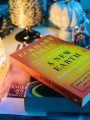 The Power of Now Review: Lessons from Eckhart Tolle’s ClassicGeneral
 The Power of Now Review: Lessons on Presence & Ending SufferingGeneral
 Book Review: The Power of Now Summary & Key LessonsGeneral
 The Power of Now Review: Lessons on Presence & Inner PeaceGeneral
 The Self-Help De-Influence Movement: Beyond Toxic PositivityGeneral
 Kryon: Ancient Prophecy & Humanity’s Next Evolutionary StepGeneralThe Power of Now Review: Lessons from Eckhart Tolle’s ClassicGeneralThe Power of Now Review: Lessons on Presence & Ending SufferingGeneralBook Review: The Power of Now Summary & Key LessonsGeneralThe Power of Now Review: Lessons on Presence & Inner PeaceGeneral
Sign in without leaving this document. You will return here automatically.

The Ultimate Masters
https://www.ultimatemasters.org
Subscribe for one year to access all your favourite downloads
500 / year
Unlimited downloads forever
Unlimited downloads
Subscribe for one to access hundreds of downloads.
50 / month
Subscribe quarterly/per term
75 / month
The Ultimate Masters
https://www.ultimatemasters.org
Continue directly to this store’s secure WooCommerce checkout.
Earn direct and team commission with personal links, campaign creatives, discount coupons and transparent reporting.
0 responses on "Ramana Maharshi: Life, Teachings & The Path of Self-Inquiry"