

Navigating the Inner Landscape
What is the source of our persistent anxiety? How can we move through life with more grace and less resistance? These fundamental questions are not new; they form the bedrock of human inquiry. Spiritual philosophy offers not a set of dogmatic answers, but a collection of blueprints for exploring our inner world. Instead of presenting figures to be followed, this article examines diverse frameworks for addressing the core challenges of being human, from taming a restless mind to finding harmony with the flow of existence.
Overcoming the Tyranny of Thought
Much of modern distress stems from a mind in constant overdrive, cycling through past regrets and future worries. Several contemporary thinkers have focused on this very issue, proposing that the antidote is not more thinking, but a radical shift in awareness.
Eckhart Tolle: Anchoring in the Present
Eckhart Tolle argues that our primary source of suffering is an unconscious identification with the stream of thought. We mistake the voice in our head for who we are, becoming trapped in the narratives of the ego. His solution is deceptively simple: anchor your attention in the present moment. By focusing on the sensations of your body, your breath, or your immediate surroundings, you create a gap in the compulsive thinking process. This practice, he suggests, is the doorway to a state of inner peace that exists beneath the surface of mental noise. His work, including The Power of Now, serves as a practical guide to disengaging from the mind and experiencing life directly.
Thich Nhat Hanh: Weaving Mindfulness into Daily Life
Vietnamese Zen Master Thich Nhat Hanh transformed the concept of meditation from a formal, isolated practice into a continuous art of living. He taught that any activity—drinking tea, walking, or answering an email—can become an exercise in mindfulness. By bringing our full, non-judgmental attention to the task at hand, we cease to be pulled away by distraction. This “Engaged Buddhism” fosters a deep sense of connection to the present and cultivates compassion. For Thich Nhat Hanh, peace is not a distant goal to be achieved, but a reality to be touched in every mindful breath.
For those looking to take the next step, Become an Ultimate Master of your life is a resource worth exploring.
For those looking to take the next step, Heal your past, design your future is a resource worth exploring.
Finding Harmony in a World of Striving
Our culture often glorifies effort, control, and the relentless pursuit of goals. This can lead to a state of perpetual struggle against the natural unfolding of life. Taoist philosophy, and its modern interpreters, offers a compelling alternative.
Lao Tzu: The Wisdom of Effortless Action
The ancient text of the Tao Te Ching, attributed to Lao Tzu, is a poetic masterpiece that points toward “the Way” (the Tao)—the intrinsic, natural order of the universe. Its central principle is Wu Wei, often translated as “non-action.” This does not mean passivity, but rather acting in a way that is so aligned with the natural flow that it feels effortless, like a boatman steering through a current rather than rowing against it. It is an invitation to release rigid control and trust in a deeper intelligence, allowing outcomes to emerge organically.
Alan Watts: Deconstructing the Ego’s Game
The British philosopher Alan Watts was instrumental in translating Eastern concepts like the Tao for a Western audience. He masterfully explained how our anxiety stems from the ego’s desperate attempt to control an uncontrollable universe. Watts argued that we constantly confuse the map for the territory—our words, symbols, and thoughts about life for life itself. He encouraged people to see through this illusion and embrace the “cosmic dance,” participating in life with a sense of playfulness and wonder rather than anxious striving.
The Radical Path of Self-Inquiry
While many philosophies offer a system or a path, some thinkers insist that true freedom lies in dismantling all systems, including the authority of any teacher or guru.
Jiddu Krishnamurti: The Pathless Land
Jiddu Krishnamurti’s life was a testament to his message. Identified in his youth as a future “World Teacher” by the Theosophical Society, he dramatically dissolved the organization created for him, declaring that truth is a “pathless land.” He asserted that reliance on any belief system, tradition, or authority—including his own—was a barrier to self-knowledge. Krishnamurti’s core teaching was the practice of choiceless awareness: observing the contents of one’s own mind without judgment, analysis, or condemnation. Through this direct, unmediated perception, he argued, one can achieve psychological liberation from the conditioning of the past.
Conclusion: Crafting a Personal Philosophy
The ideas of Rumi’s divine love, Tolle’s presence, Lao Tzu’s flow, and Krishnamurti’s self-inquiry are not competing doctrines. They are tools. They offer different lenses through which to view our own experience and different methods for navigating our inner and outer worlds. The ultimate task is not to choose a single blueprint and follow it blindly, but to draw upon this collective wisdom to build a personal philosophy that is authentic, resilient, and deeply connected to the reality of our own lives.
- Thích Nhất Hạnh: Life, Teachings & Global InfluenceGeneral
- Thích Nhất Hạnh: Life, Mindfulness & Engaged BuddhismGeneral
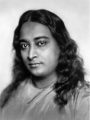 Paramahansa Yogananda: Life, Kriya Yoga & Global InfluenceGeneral
- Neville Goddard: The Power of Imagination & Conscious CreationGeneral
 Paramahansa Yogananda: Life, Kriya Yoga & Spiritual LegacyGeneral
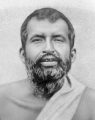 Paramahansa Yogananda: Life, Teachings & Spiritual LegacyGeneral
 Paramahansa Yogananda: Life, Kriya Yoga & Divine PurposeGeneral
- Profile: Rumi – Life, Poetry, Teachings & Global InfluenceGeneral
- Ramana Maharshi: Life, Teachings & The Path of Self-InquiryGeneral
- Thích Nhất Hạnh: Life, Teachings & The Art of MindfulnessGeneral
- Thích Nhất Hạnh: Life, Teachings & Global InfluenceGeneral
- Thích Nhất Hạnh: Life, Mindfulness & Engaged BuddhismGeneral
- Paramahansa Yogananda: Life, Kriya Yoga & Global InfluenceGeneral
- Neville Goddard: The Power of Imagination & Conscious CreationGeneral
- Paramahansa Yogananda: Life, Kriya Yoga & Spiritual LegacyGeneral

0 responses on "Top Spiritual Gurus: Ancient Wisdom for Modern Seekers"