

Breaking Down the Monastery Walls
In the crucible of war-torn Vietnam, a young monk named Thích Nhất Hạnh faced a profound choice: remain in the secluded world of contemplation or engage with the immense suffering outside the monastery gates. His decision was to do both, giving birth to a movement that would reshape modern spirituality. He co-founded the School of Youth for Social Service, sending monks and nuns into the countryside to rebuild villages and aid the wounded. This was the genesis of “Engaged Buddhism,” a philosophy asserting that spiritual practice is not a retreat from the world but a powerful tool for transforming it. He taught that the truest meditation hall is life itself—that the act of washing dishes, driving a car, or answering the telephone could be a profound exercise in presence. In doing so, he effectively dismantled the conceptual walls that separated sacred practice from everyday existence.
Forging a New Lexicon for Ancient Truths
Thích Nhất Hạnh’s unique genius lay in his ability to translate profound, ancient concepts into a simple, poetic language accessible to everyone. He was a master of the spiritual lexicon. He coined the term “Interbeing” to distill the complex Buddhist teaching of interconnectedness into a single, resonant word. To explain it, he would hold up a blank sheet of paper and reveal its hidden contents: the cloud that provided the rain, the sun that nourished the tree, and the logger who cut it down. He showed that nothing exists independently and that our own well-being is inextricably linked to the well-being of all. Through more than 100 books and countless short verses called gathas, he created a new vocabulary for mindfulness, allowing millions to grasp ideas like impermanence and no-self without needing to study dense scriptures.
For those looking to take the next step, Become an Ultimate Master of your life is a resource worth exploring.
For those looking to take the next step, Heal your past, design your future is a resource worth exploring.
The Uncompromising Politics of Presence
While often seen as a gentle teacher of peace, Thích Nhất Hạnh’s path was one of uncompromising spiritual politics. His persistent calls for a negotiated end to the Vietnam War were not a passive wish but a direct challenge to the powers fueling the conflict. This activism came at a great personal cost: in 1966, he was exiled, barred from returning to his homeland for nearly four decades. His influence, however, only grew. He met with Dr. Martin Luther King Jr., who was so impressed by his serene strength and moral clarity that he nominated him for the Nobel Peace Prize, calling him “an apostle of peace and nonviolence.” This act solidified his position not just as a spiritual leader, but as a global figure whose commitment to non-violent action offered a radical alternative to a world built on conflict.
Building a Global Tribe of Mindfulness
During his long exile, Thích Nhất Hạnh didn’t just write and teach; he built a new kind of community. In 1982, he established Plum Village in the French countryside, which grew from a small farmstead into the West’s largest Buddhist monastery. More than a religious center, it became a global laboratory for mindful living. He also founded the Order of Interbeing, a community that blurred the lines between monastic and lay practitioners, uniting them under a shared commitment to the Fourteen Mindfulness Trainings—a modern code of ethics for compassionate action. This created a worldwide “sangha,” or community, bound not by dogma or geography, but by the shared practice of returning to the present moment.
A Legacy of Gentle Disruption
Thích Nhất Hạnh’s life was a masterclass in gentle disruption. He disrupted the notion that spirituality and social action were mutually exclusive. He disrupted the idea that ancient wisdom was inaccessible to the ordinary person. When he was finally allowed to return to Vietnam in 2018, he chose to live his final days at the Từ Hiếu Temple, the very place his journey began, completing a remarkable circle. His peaceful death in 2022 was not an end but a continuation, a final lesson in the impermanence he so often taught. His true legacy is not found in statues or temples, but in the countless individuals across the globe who, through the simple act of conscious breathing, carry on his quiet revolution for a more compassionate world.
- Thích Nhất Hạnh: Life, Teachings & Global InfluenceGeneral
- Thích Nhất Hạnh: Life, Mindfulness & Engaged BuddhismGeneral
 Paramahansa Yogananda: Life, Kriya Yoga & Global InfluenceGeneral
- Neville Goddard: The Power of Imagination & Conscious CreationGeneral
 Paramahansa Yogananda: Life, Kriya Yoga & Spiritual LegacyGeneral
 Paramahansa Yogananda: Life, Teachings & Spiritual LegacyGeneral
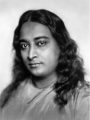 Paramahansa Yogananda: Life, Kriya Yoga & Divine PurposeGeneral
- Profile: Rumi – Life, Poetry, Teachings & Global InfluenceGeneral
- Ramana Maharshi: Life, Teachings & The Path of Self-InquiryGeneral
- Thích Nhất Hạnh: Life, Teachings & The Art of MindfulnessGeneral
- Thích Nhất Hạnh: Life, Teachings & Global InfluenceGeneral
- Thích Nhất Hạnh: Life, Mindfulness & Engaged BuddhismGeneral
- Paramahansa Yogananda: Life, Kriya Yoga & Global InfluenceGeneral
- Neville Goddard: The Power of Imagination & Conscious CreationGeneral
- Paramahansa Yogananda: Life, Kriya Yoga & Spiritual LegacyGeneral

0 responses on "Thích Nhất Hạnh: Life, Mindfulness & Engaged Buddhism"