


Annual
Subscribe for one year to access all your favourite downloads
500 / year

Before the world knew him as a poet of divine frenzy, Jalāl al-Dīn Rūmī (1207–1273) was a man of the book. His world in 13th-century Konya, the capital of the Seljuk Sultanate of Rum, was one of meticulous Islamic jurisprudence and theological debate. As the heir to a distinguished scholarly lineage, his path was one of intellectual mastery, a life governed by reason and revered tradition. He was a celebrated professor, delivering sermons to a community that looked to him for guidance. This was a world of certainty, built upon the sturdy foundations of sacred texts and established laws—a vessel perfectly formed, yet waiting to be shattered.
This carefully constructed world of intellect was upended in 1244. The catalyst was not a text, but a man—a wandering, enigmatic dervish known as Shams of Tabriz. Their encounter was less a meeting and more a spiritual conflagration. Shams, whose name means “the sun,” acted as a living mirror, forcing Rumi to confront the limits of his own knowledge and igniting a passionate, all-consuming quest for divine love (ishq). Rumi famously abandoned his lectern and his students, choosing instead the profound spiritual dialogue (sohbat) with this mysterious stranger. The scholar’s structured world dissolved in the fire of this transformative friendship.
The intensity of their bond bred jealousy among Rumi’s followers, and Shams vanished, likely driven away. The devastation of this loss cracked open a wellspring of creativity within Rumi. When a second, permanent disappearance followed, his grief became the ink with which he wrote. His longing was not silent; it erupted into verse. In the fiery lyric poems of the Dīvān-e Shams-e Tabrīzī, he adopted the name of his beloved mentor, effectively dissolving his own identity into the object of his love. Later, in the six-volume epic, the Masnavi, he wove fables and Quranic wisdom into a guide for the soul’s return to its source, creating what many would come to call the “Persian Quran.” His poetry was not a quiet, composed act; it was a spontaneous outpouring, often recited in a state of trance during the turning dance of the Sema.
For those looking to take the next step, Become an Ultimate Master of your life is a resource worth exploring.
For those looking to take the next step, Heal your past, design your future is a resource worth exploring.
Rumi’s teachings are not a systematic philosophy but a map of the transformed heart. His poetry illuminates a path defined by a few central, powerful truths.
At the heart of Rumi’s vision is a radical redefinition of love. It is not a mere emotion but the very engine of existence, the true path to God. The spiritual journey, for him, was a process of polishing the heart of ego and attachment until it could perfectly reflect the Divine. This required the ultimate surrender: the annihilation of the self (fana) in the overwhelming presence of the Beloved, which in turn leads to a permanent state of abiding in God (baqa).
Rumi taught that our sense of being separate individuals is the ultimate illusion. All of creation, he expressed through potent imagery, is a single manifestation of divine reality (Wahdat al-Wujud). He saw humanity not as isolated drops of water, but as the entire ocean contained within a single drop. The soul’s cry, like the mournful sound from a reed flute, is the Divine expressing itself through us, longing to return to the reed bed from which it was cut.
The legacy of this profound transformation is not confined to manuscripts. It lives on in the hypnotic Sema ceremony of the Mevlevi Order, the “Whirling Dervishes,” who physically enact the soul’s ecstatic orbit around a divine center. Centuries later, Rumi’s words resonate across cultures and continents precisely because they map out a universal journey—from the confines of the rational mind to the boundless expanse of the loving heart. It is a timeless alchemy of the soul that continues to beckon seekers today.

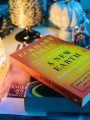 The Power of Now Review: Lessons from Eckhart Tolle’s ClassicGeneral
 The Power of Now Review: Lessons on Presence & Ending SufferingGeneral
 Book Review: The Power of Now Summary & Key LessonsGeneral
 The Power of Now Review: Lessons on Presence & Inner PeaceGeneral
 The Self-Help De-Influence Movement: Beyond Toxic PositivityGeneral
 Kryon: Ancient Prophecy & Humanity’s Next Evolutionary StepGeneralThe Power of Now Review: Lessons from Eckhart Tolle’s ClassicGeneralThe Power of Now Review: Lessons on Presence & Ending SufferingGeneralBook Review: The Power of Now Summary & Key LessonsGeneralThe Power of Now Review: Lessons on Presence & Inner PeaceGeneral
Sign in without leaving this document. You will return here automatically.

The Ultimate Masters
https://www.ultimatemasters.org
Subscribe for one year to access all your favourite downloads
500 / year
Unlimited downloads forever
Unlimited downloads
Subscribe for one to access hundreds of downloads.
50 / month
Subscribe quarterly/per term
75 / month
The Ultimate Masters
https://www.ultimatemasters.org
Continue directly to this store’s secure WooCommerce checkout.
Earn direct and team commission with personal links, campaign creatives, discount coupons and transparent reporting.
0 responses on "Rumi: Life, Teachings, and the Philosophy of Divine Love"