Annual
Subscribe for one year to access all your favourite downloads
500 / year
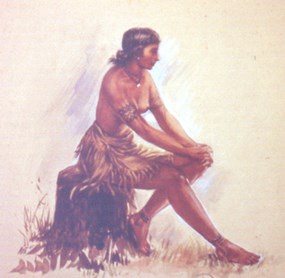
Often described as a Renaissance woman born centuries before the Renaissance, Hildegard of Bingen was a true original. This remarkable 12th-century Benedictine abbess excelled as a writer, composer, philosopher, mystic, visionary, and physician. But reducing her to a list of accomplishments misses the essence of her profound impact. She offers a unique lens through which to view spirituality, the natural world, and the very essence of human existence.
Hildegard’s path was far from ordinary. As the tenth child of a noble family, she was offered to the Church, a common practice known as a tithe. This wasn’t necessarily a burden; it opened doors to education and a life dedicated to spiritual pursuits. Her mentor, Jutta of Sponheim, a devout recluse, provided Hildegard with rigorous training in scripture, Latin, and spiritual disciplines. This nurturing environment allowed Hildegard’s unique gifts to flourish. From a young age, Hildegard experienced vivid visions, which she believed were divine communications. These visions weren’t fleeting moments; they became the foundation of her theological and scientific explorations.
Hildegard left behind a rich tapestry of writings. Her most significant works include:
Unlike some of her contemporaries, Hildegard didn’t compartmentalize faith and reason. She saw the universe as an interconnected whole, a reflection of divine order. Humanity, in her view, played a vital role in maintaining this cosmic harmony. Through virtuous living and a deep connection with God, individuals could contribute to the well-being of the entire universe. She envisioned the cosmos as a series of interconnected spheres, each governed by divine principles.
Perhaps the most captivating concept in Hildegard’s thought is viriditas. More than just “greenness,” it represents the life force, the vibrant energy that permeates all of creation. Think of the sap rising in a tree, the bloom of a flower, or the spark of creativity within a person. Viriditas is the divine essence that sustains and animates everything. Nurturing this life force, both within ourselves and in the world around us, is crucial for spiritual and physical well-being. For example, tending a garden, practicing mindfulness, or engaging in creative pursuits can all cultivate viriditas.
Hildegard wasn’t just a writer; she was also a gifted composer. Her liturgical music is characterized by its ethereal beauty, soaring melodies, and profound spiritual depth. She composed both the words and the music for her songs, which were performed by the nuns in her convent. Her compositions are notable for their wide vocal range and innovative use of melismatic ornamentation. A prime example is the *Ordo Virtutum*, a morality play featuring allegorical characters representing virtues and vices, showcasing her musical genius.
Hildegard’s contributions extend beyond the spiritual realm. Her writings on medicine and natural science, such as *Physica* and *Causae et Curae*, demonstrate a remarkable understanding of the natural world and its healing properties. She documented the medicinal uses of plants, animals, and minerals, providing practical advice on treating various ailments. Her approach to medicine was holistic, emphasizing the importance of diet, lifestyle, and spiritual well-being in maintaining health. For instance, she recommended specific herbs for treating ailments, linking physical health to spiritual balance.
Centuries after her death, Hildegard of Bingen continues to inspire. Her holistic approach to health resonates with contemporary concerns about environmental sustainability and the interconnectedness of mind, body, and spirit. Her life and work serve as a powerful reminder of the importance of integrating faith, reason, and creativity in the pursuit of knowledge and understanding. She encourages us to see the world not as a collection of separate parts, but as a unified whole, infused with divine energy and purpose.
If you want a practical next step, you can also check out Heal your past, design your future.
If you want a practical next step, you can also check out Become an Ultimate Master of your life.
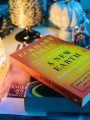 The Power of Now Review: Lessons from Eckhart Tolle’s ClassicGeneral
 The Power of Now Review: Lessons on Presence & Ending SufferingGeneral
 Book Review: The Power of Now Summary & Key LessonsGeneral
 The Power of Now Review: Lessons on Presence & Inner PeaceGeneral
 The Self-Help De-Influence Movement: Beyond Toxic PositivityGeneral
 Kryon: Ancient Prophecy & Humanity’s Next Evolutionary StepGeneralThe Power of Now Review: Lessons from Eckhart Tolle’s ClassicGeneralThe Power of Now Review: Lessons on Presence & Ending SufferingGeneralBook Review: The Power of Now Summary & Key LessonsGeneralThe Power of Now Review: Lessons on Presence & Inner PeaceGeneral
Sign in without leaving this document. You will return here automatically.

The Ultimate Masters
https://www.ultimatemasters.org
Subscribe for one year to access all your favourite downloads
500 / year
Unlimited downloads forever
Unlimited downloads
Subscribe for one to access hundreds of downloads.
50 / month
Subscribe quarterly/per term
75 / month
The Ultimate Masters
https://www.ultimatemasters.org
Continue directly to this store’s secure WooCommerce checkout.
Earn direct and team commission with personal links, campaign creatives, discount coupons and transparent reporting.
0 responses on "Top People Profiles: Spiritual Insights and Teachings for Higher Purpose"