

Annual
Subscribe for one year to access all your favourite downloads
500 / year

Introduction: The Search for Deeper Meaning
For as long as I can remember, I’ve carried a persistent feeling that there must be more to life than what we see on the surface. It’s a quiet hum beneath the noise of daily routines, a sense that the world of deadlines, ambitions, and material pursuits, while important, is only one layer of a much deeper reality. This inner seeking has led me down many paths of knowledge and philosophy, always searching for a truth that resonated not just in my mind, but in the very core of my being.
This search culminated in a profound, almost dream-like encounter with a source of wisdom so clear and resonant it felt less like a conversation and more like a remembrance. It was an experience with a teacher, a guide who appeared not with rigid doctrines, but with simple, elegant truths that acted like keys, unlocking doors within my own consciousness. This wasn’t about learning new information, but about recognizing what my soul already knew.
The encounter left me with a fundamentally new map for navigating reality. Of the many insights shared, five truths in particular have become the cornerstones of my new understanding. They are not just concepts to be considered, but principles to be lived, and they have the power to shift one’s perception from being a passenger in life to being a conscious co-creator. These are the truths that reshaped my reality.
1. Your Struggles Aren’t Punishments; They’re Your Greatest Assignments.
This was the first and perhaps most powerful reframe. I, like many, used to view hardship as a sign that something was wrong—a cosmic punishment or a random misfortune. The teacher explained that this perspective is based on a misunderstanding of our purpose here. Life is a “divine school,” and every experience, especially the ones that bring us to our knees, is a meticulously designed lesson for the evolution of our soul. Pain, I learned, is an inevitable part of growth, but suffering is optional. Suffering arises from our resistance to the lesson at hand.
Trials are not meant to break us but to refine us; they are sacred initiations that burn away the parts of us that are no longer needed, much like fire purifies gold. Many ancient traditions understood this. The Dagara people of Burkina Faso, for instance, use difficult initiations not as punishment, but as sacred rites of passage to awaken hidden strengths. This single idea dismantled years of feeling like a victim and handed me the power to see my life as a curriculum for my own evolution. It moves you from the disempowered position of a victim asking, “Why is this happening to me?” to the conscious stance of a student asking, “What is this trying to teach me?”
“Smooth seas do not make skillful sailors. Every storm, every tide, every moment of stillness is part of the grand education of the soul. The only question is—are you ready to learn?”
2. Your Inner World Is the Blueprint for Your Outer Reality.
The teacher emphasized a universal law that echoes through ancient wisdom: “As above, so below; as within, so without.” The universe is not a chaotic, random place. It is intentional, and our external world is a direct mirror of our internal state. This wisdom isn’t abstract; it’s embedded in traditions worldwide. The Akan people of West Africa, for example, view the human being as a small universe, a microcosm of the cosmos itself, while the Yoruba tradition speaks of our Orí (our higher self or divine consciousness) as a direct reflection of divine intelligence.
Everything is energy, and everything vibrates. Our thoughts and feelings are not just fleeting, internal events; they are frequencies we broadcast into the universe, shaping the reality we experience. This principle doesn’t blame us for our circumstances but rather empowers us by placing the tools of creation firmly in our hands. Realizing this felt like discovering I had been an architect all along, holding the blueprints to my own life without knowing it. We are not passive observers of a predetermined world; we are active participants, shaping our reality from the inside out.
“If there is chaos in your outer world, look within. If there is peace within, it will manifest outward. That is why spiritual mastery begins not by controlling the outside, but by mastering the self.”
3. You’re Not Learning New Truths; You’re Remembering Who You’ve Always Been.
This is a beautifully counter-intuitive truth. The spiritual journey is not about becoming something new, different, or better. It is a process of unlearning and undoing, of shedding the layers of conditioning, fear, and false identity to remember the divine, infinite being we have always been. We have been taught to believe in limitation and separation, but this is a grand illusion.
Our original state is one of infinite awareness and unity with the Divine. The path is simply a return to this “highest self,” a remembrance codified in traditions like the Kemetic teachings of Ma’at (the principle of divine balance, truth, and order) and the Yoruba path of elevating Ori (the higher self). I suddenly understood that all my seeking wasn’t a search for something I lacked, but a journey home to a truth I already carried. This realization is profoundly liberating; it means we don’t have to strive to become worthy or enlightened. We already are. Our work is to lovingly dismantle the walls we’ve built that obscure our own magnificence.
“You are not lost. You are simply remembering. Your highest path is not somewhere in the future; it is beneath your feet, in this very breath, in the beat of your heart.”
4. Your DNA Is a Spiritual Inheritance From Your Ancestors.
This concept stretched my understanding of selfhood. The teacher explained that our DNA is far more than a biological blueprint; it is a living archive. It stores not only the physical traits of our lineage but also their memories, wisdom, triumphs, and even unresolved traumas. The Dogon people of Mali have long held that celestial beings encoded sacred knowledge within human bloodlines, while in the Ifá tradition, it is understood that ancestral memory is stored in the Ori Inu, or the inner self.
This understanding transforms our personal healing journey into a sacred act with profound implications, a truth captured beautifully in the African principle of Ubuntu: “I am because we are.” When we do the work to heal our wounds, we are not just doing it for ourselves; that healing energy ripples backward and forward through time, liberating our ancestors and clearing the path for future generations. This reframed my identity from an isolated individual to a “living bridge,” a vital link in a vast chain of human experience, capable of transforming the past through my own awakening.
“Your ancestors do not live in the past. They live in your breath, in your thoughts, in the way your heart beats to rhythms older than time.”
——————————————————————————–
5. Love Isn’t Just an Emotion; It’s the Operating Frequency of the Universe.
In our everyday lives, we tend to think of love as an emotion we feel for another person. The teacher elevated this concept entirely, explaining that love is the highest and most fundamental vibrational frequency in existence. It is the cosmic force that binds all of creation together. It is the very fabric of the universe.
From this perspective, virtues like unconditional love and compassion are not just moral ideals; they are powerful alchemical forces. This is a universal truth found at the heart of all great spiritual traditions, from the unconditional love of Christ and the Metta (loving-kindness) of Buddhism to the ancient Kemetic principle of Ma’at, which embodies universal harmony and balance. Hearing this, I realized that every choice could be simplified down to one question: “What would love do?” By consciously choosing to operate from this frequency, we can fundamentally transform our energy and our entire experience of life.
“Love is the greatest alchemy, capable of transforming pain into wisdom, division into unity, and suffering into liberation.”
Conclusion: The Invitation to Awaken
These five truths, taken together, point to a single, profound conclusion: the journey of awakening is a fundamental shift in perception. It is the process of moving from seeing ourselves as separate, limited individuals navigating a chaotic world, to remembering that we are divine, interconnected creators living in an intentional universe. It is a return to the love, wisdom, and power that has always been our birthright.
The teachings I received were not an escape route from reality, but a master key to unlock its deeper dimensions. They invite us not to leave the world, but to inhabit it so completely that our very presence becomes an act of divine creation. The lessons are all around us, the tools are within us, and the guidance is always available when we learn to listen to the stillness. The final veil is lifting. The call to awaken has been sounded—will you answer?
Study Guide: The Grand Awakening
This guide is designed to deepen the understanding of the core spiritual principles, narratives, and cross-cultural wisdom presented in the excerpts from The Grand Awakening: Unveiling the Divine Within. It provides a series of questions to test comprehension and a glossary of key terms for reference.
Short-Answer Quiz
Instructions: Answer the following questions in 2-3 complete sentences, drawing your answers exclusively from the provided source material.
1. According to Shalom, what is the true nature of the “Grand Awakening”?
2. How does Shalom explain the spiritual significance of “light” beyond its physical properties?
3. Define the Law of Divine Oneness and explain its connection to the African philosophy of Ubuntu.
4. What is the “5th Dimension,” and how does an individual begin to experience this state of being?
5. Describe the roles of the four primary elements (Earth, Water, Fire, Air) as fundamental forces that shape existence.
6. How does the text describe the soul’s journey after death, referencing concepts like Samsara and ancestral guidance?
7. In the context of “Life as a Divine School,” what are the distinct roles of suffering and joy?
8. How are masculine and feminine energies explained, and what is the significance of the Kemetic principle of Maat in balancing them?
9. What is the “great illusion” or “matrix,” and what is the primary emotional tool used to maintain it?
10. Explain the relationship between service and destiny as taught by Shalom.
——————————————————————————–
Answer Key
1. The Grand Awakening is described as a profound shift in consciousness where individuals awaken to their higher being and true selves. It involves a process of remembering one’s divine nature and connection to all that is, thereby moving beyond the pervasive illusion of separation.
2. Shalom explains that light is the very essence of life, representing divine clarity, wisdom, and the presence of God, not just physical illumination. Citing various spiritual traditions, he states that living in this light allows one to walk with confidence and purpose, while a lack of it leads to confusion, darkness, and stagnation.
3. The Law of Divine Oneness is the fundamental truth that all things in the universe are connected and that separation is merely an illusion. This law is directly related to Ubuntu, an African philosophy meaning “I am because we are,” which embodies the principle of interconnectedness and collective consciousness.
4. The 5th Dimension is not a physical place but a state of being or a shift in consciousness that transcends the linear limitations of time and space. An individual begins to experience it through moments of sudden clarity, unexplainable knowing, strong intuition, and an undeniable sense of unity with all of existence.
5. Earth represents the foundation, stability, and grounding force of life. Water symbolizes the sacred flow of emotion, intuition, and adaptation. Fire is the force of transformation, purification, and renewal that burns away what no longer serves, while Air represents thought, inspiration, and the divine breath of consciousness.
6. The soul’s journey is presented as eternal and cyclical, a continuous process of learning and transformation rather than a linear path. This is illustrated by concepts like Samsara, the Hindu wheel of birth and rebirth governed by Karma, and the African belief that ancestors remain active guides who may return to complete unfinished lessons.
7. In life’s “divine school,” suffering is not a punishment but an essential teacher and an invitation for growth. Trials are seen as initiations that refine the soul and awaken hidden strengths. Joy is also a teacher, acting as a spiritual messenger that signals alignment with the divine flow and encourages expansion.
8. Masculine and feminine energies are not opposites but complementary forces within every individual that must be balanced for a harmonious life. Referencing Maat, the Kemetic principle of truth and order, the text explains that imbalance—such as masculine energy without compassion or feminine energy without purpose—leads to suffering and stagnation.
9. The “great illusion” or “matrix” is the deeply ingrained belief in separation—the idea that we are disconnected from the Divine, each other, and the universe. The primary tool used to maintain this illusion and trap human potential is fear, including fear of scarcity, judgment, failure, and death.
10. Shalom teaches that service is the “doorway to destiny” and the primary way to align with one’s divine assignment. By choosing to serve others, an individual aligns with the divine current of life rather than resisting it, which in turn helps them to remember and fulfill the true purpose their soul chose before birth.
——————————————————————————–
Essay Questions
Instructions: The following questions are designed for deeper reflection and synthesis of the text’s themes. Formulate your responses in a standard essay format.
1. The narrative of The Grand Awakening is framed as a dream. Analyze how this framing device affects the interpretation of Shalom’s teachings and the narrator’s journey of self-discovery.
2. Throughout the text, Shalom synthesizes wisdom from diverse spiritual traditions (African, Kemetic, Christian, Buddhist, Hindu, etc.). Discuss the central message that unifies these different perspectives and explain how this synthesis supports the book’s core theme of “divine oneness.”
3. Explore the concept of “remembering” versus “learning” as it is presented in the book. How does this distinction redefine the process of spiritual awakening, and what practical steps does Shalom suggest for activating this deep remembrance within oneself?
4. Discuss the relationship between the inner world and the outer world as explained by the Law of Correspondence (“As within, so without”). How do thoughts, emotions, and intentions shape an individual’s reality, and what is the role of the “divine alchemist” in this process?
5. Shalom states, “There is no savior coming to rescue you… You are already whole. Already divine.” Analyze this statement in the context of personal responsibility, divine sovereignty, and the “great choice” humanity faces during the Grand Awakening.
——————————————————————————–
Glossary of Key Terms
| Term | Definition (as derived from the Source Context) |
| 5th Dimension | A state of being or shift in consciousness beyond the limitations of time and space, characterized by clarity, intuition, and a sense of unity. |
| Ahavah Rabba | A Jewish concept of “great love” that reflects the profound bond between the Creator and creation. |
| Akashic Records | A vast, esoteric library of the soul’s history where all memories, lives, and knowledge are stored. |
| Alchemy | The transmutation of the soul; the spiritual practice of refining the self by turning pain into power, fear into love, and suffering into wisdom. |
| Asé (or Ashe) | A Yoruba concept for the divine life force that illuminates, empowers, and manifests reality through focused intent. |
| Ayanmo | A Yoruba concept for one’s destiny, which is chosen by the soul before birth. |
| Dark Night of the Soul | A period of intense spiritual trial and despair where the ego shatters, leading to a profound rebirth into one’s true self. |
| Empaako | One of twelve names of endearment given at birth in the Runyoro-Rutooro culture of Uganda. |
| Grand Awakening | A planetary and personal shift in consciousness where humanity remembers its divine nature and awakens from the illusion of separation. |
| Heka | The ancient Kemetic (Egyptian) term for sacred speech and the power of the spoken word to shape reality. |
| I AM | The awareness of being; the recognition of oneself as the higher self or the divine presence expressing in a physical body. |
| Ifá | A Yoruba spiritual tradition of wisdom and divination that includes concepts like Ori and Ase. |
| Ka and Ba | In Kemetic belief, the spirit and personality aspects of the soul that continue their journey after physical death. |
| Kabukanga | A village in Ndaiga, Uganda, on the shores of Lake Albert, where the narrator’s spiritual initiation with Shalom takes place. |
| Kalunga Line | In BaKongo belief, a symbolic line that separates the visible, physical world from the unseen spiritual realm. |
| Karma | The universal law of cause and effect that governs the cycle of rebirth, ensuring every action and intention shapes the soul’s future path. |
| Kemet | The ancient name for Egypt, referenced for its profound spiritual mystery schools and wisdom traditions. |
| Kybalion | An esoteric text mentioned as the source for the Law of Correspondence (“As above, so below; as within, so without”). |
| Lake Mwitanzige | The local name for Lake Albert, meaning “killer of locusts.” |
| Maat | The ancient Kemetic principle of divine balance, truth, harmony, and cosmic order. A soul’s heart was weighed against the feather of Maat. |
| Mahabbah | The Islamic teaching of the love for Allah and His creation, seen as a fundamental aspect of faith. |
| Matrix | A term for the “great illusion” of separation; a construct of fear, social conditioning, and materialism that traps human potential. |
| Metta | A Buddhist concept and practice of loving-kindness; an unconditional love that dissolves suffering and fosters a sense of oneness with all beings. |
| Nommo | In Dogon cosmology, divine celestial beings who brought sacred knowledge; also refers to the creative power of the divine word. |
| Ntu | In BaKongo and Banyoro belief, a sacred life force that flows through all things. |
| Nyame Dua | An Akan (Ghana) term for the “Tree of God,” symbolizing the ever-present connection between the Creator and all of creation. |
| Ohr Ein Sof | A Kabbalistic concept of “Infinite Light,” referring to the divine energy that permeates all existence. |
| Ori | In Yoruba tradition, one’s divine consciousness, higher self, or personal destiny. |
| Ori Inu | The Yoruba term for the “inner head” or higher self, which is the seat of destiny and ancestral memory. |
| Samsara | The Hindu and Buddhist concept of the cyclical wheel of birth, death, and rebirth, driven by karma and attachment. |
| Sekhem | In Kemetic belief, the universal life force energy; also the force of will and self-mastery associated with the solar plexus chakra. |
| Shalom Salam | The name of the wise teacher in the narrative. “Shalom” (Hebrew) and “Salam” (Arabic) both mean peace. |
| Ubuntu | An African philosophy meaning “I am because we are,” which emphasizes interconnectedness, collective consciousness, and shared humanity. |
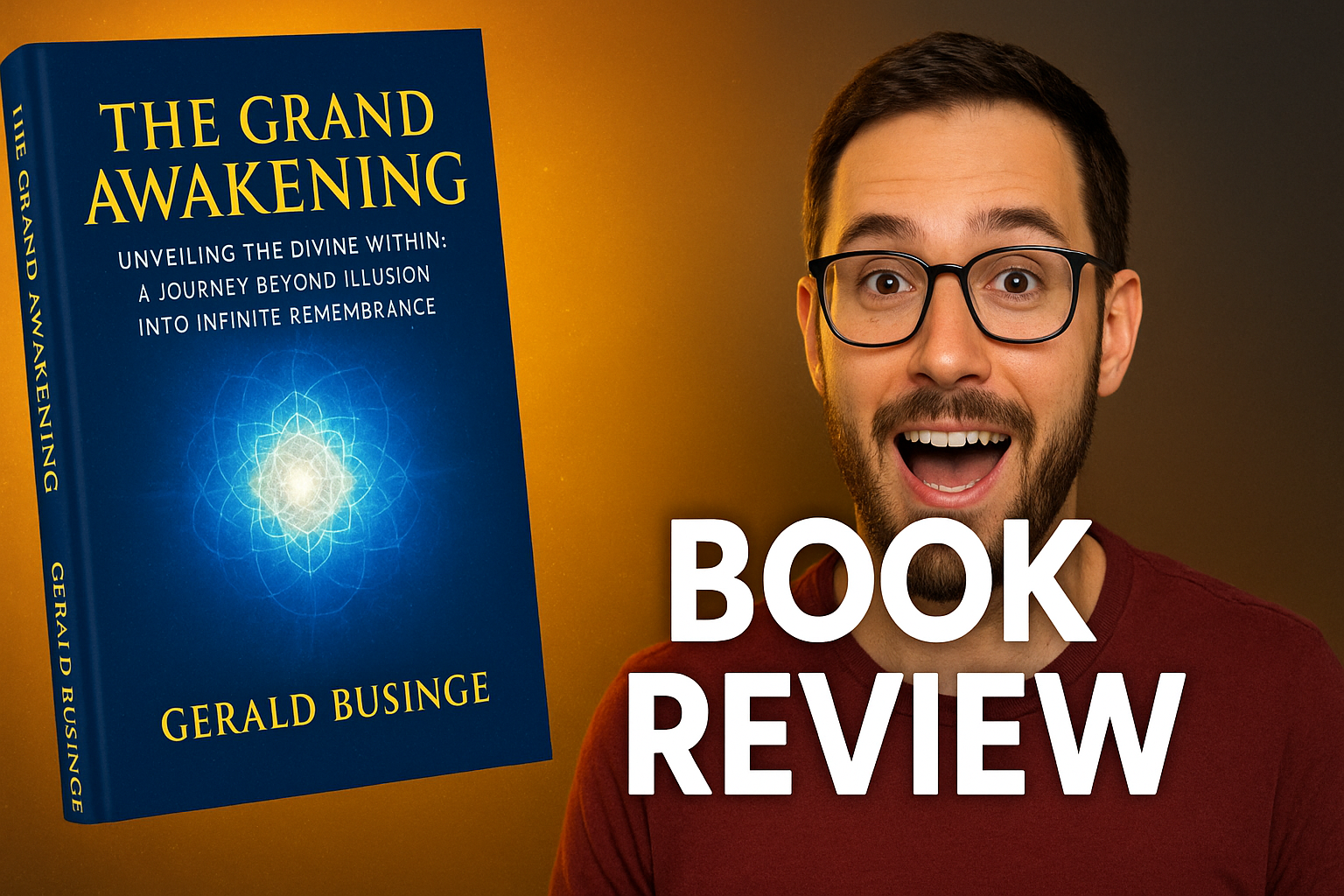
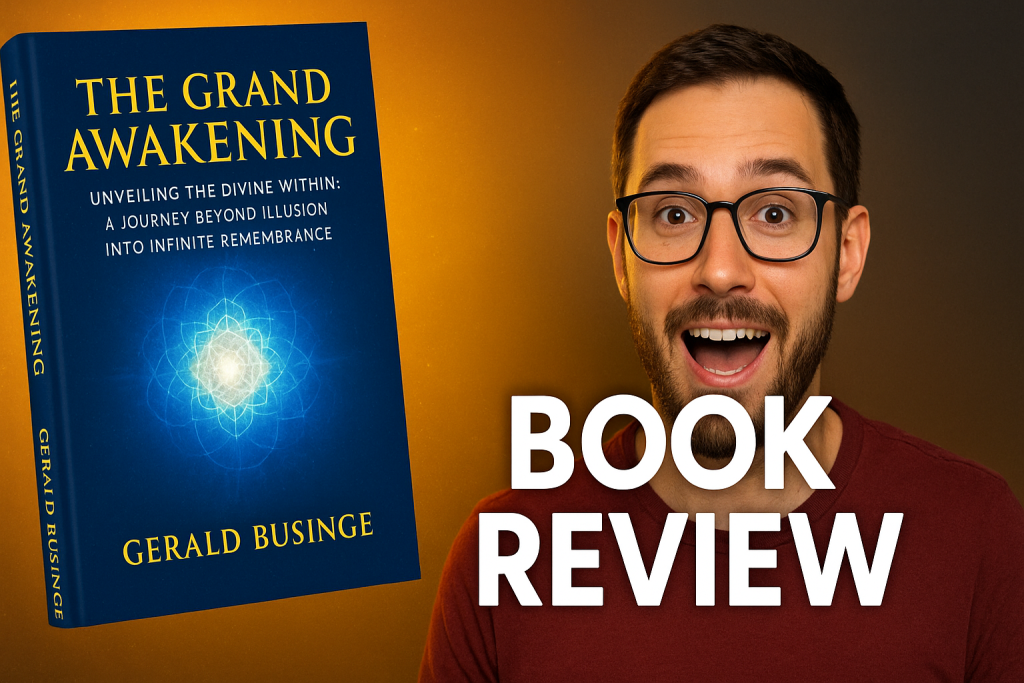
You can get book here https://www.amazon.in/Grand-Awakening-Unveiling-Illusion-Remembrance-ebook/dp/B0DYKW81R4

 The Power of Now Review: Summary & Key Lessons by Eckhart TolleGeneral
 The Biology of Belief Review: Lessons on Mind Over MatterGeneral
 The Four Agreements Review: Key Lessons & Summary of a Timeless GuideGeneral
 The Power of Now Review: Lessons on Presence & StillnessGeneral
 The Biology of Belief Review: Summary, Lessons & Why It MattersGeneral
 Book Review: The Power of Now by Eckhart Tolle — Summary & LessonsGeneral
 Book Review: The Power of Now by Eckhart Tolle — Summary & LessonsGeneral
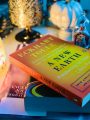 Book Review: The Power of Now by Eckhart Tolle – Summary & LessonsGeneral
 The Power of Now Review: Key Lessons on Presence & PeaceGeneral
 The Power of Now Review: Lessons & Summary for Spiritual SeekersGeneralThe Power of Now Review: Summary & Key Lessons by Eckhart TolleGeneralThe Biology of Belief Review: Lessons on Mind Over MatterGeneralThe Four Agreements Review: Key Lessons & Summary of a Timeless GuideGeneralThe Power of Now Review: Lessons on Presence & StillnessGeneralThe Biology of Belief Review: Summary, Lessons & Why It MattersGeneral
Sign in without leaving this document. You will return here automatically.

The Ultimate Masters
https://www.ultimatemasters.org
Subscribe for one year to access all your favourite downloads
500 / year
Unlimited downloads forever
Unlimited downloads
Subscribe for one to access hundreds of downloads.
50 / month
Subscribe quarterly/per term
75 / month
The Ultimate Masters
https://www.ultimatemasters.org
Continue directly to this store’s secure WooCommerce checkout.
Earn direct and team commission with personal links, campaign creatives, discount coupons and transparent reporting.
0 responses on "5 Truths I Learned from a Mystical Teacher That Reshaped My Reality"