


Annual
Subscribe for one year to access all your favourite downloads
500 / year
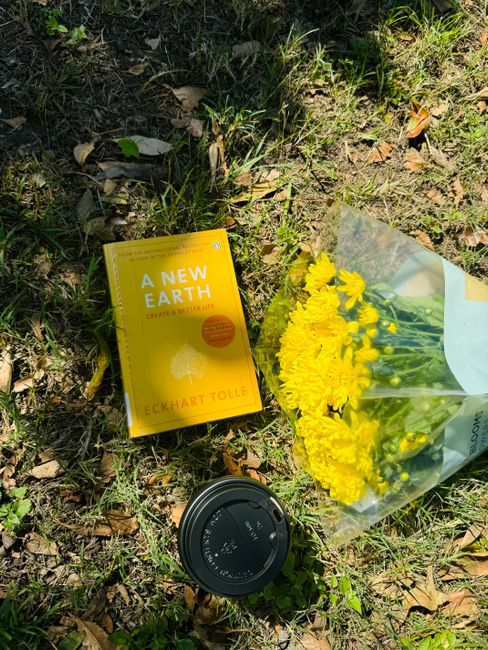

In a world saturated with notifications, deadlines, and the endless scroll of social media, our attention is constantly pulled away from the one place we truly exist: right here, right now. Eckhart Tolle’s seminal work, The Power of Now, offers less of a spiritual doctrine and more of a user manual for the human mind, diagnosing a fundamental source of modern anxiety. The core thesis is that our suffering isn’t caused by our circumstances, but by our compulsive mental commentary about them—a relentless cycle of rehashing the past and pre-worrying about the future.
Tolle identifies a critical error in our thinking: confusing functional “clock time” with all-consuming “psychological time.” Clock time is a tool; we use it to set a meeting for 3 PM or plan a project deadline. Psychological time, however, is a mental prison. It’s the state of being mentally stuck in yesterday’s mistakes or projecting anxiety onto tomorrow’s challenges. For example, while physically present in a family dinner, one might be mentally replaying a stressful work email. This disconnect is where Tolle argues that life’s richness is lost, replaced by a phantom reality constructed entirely by thought.
A cornerstone of Tolle’s framework is the concept of the “pain-body.” He defines this as a lingering energy field of old, unresolved emotional pain. Think of it as a dormant volcano of past hurts and grievances. It remains quiet until a present-day event—a critical comment, a minor inconvenience—acts as a trigger, causing a disproportionately strong emotional eruption. By understanding this mechanism, we can learn to spot the pain-body’s activation and avoid being hijacked by it, preventing a small spark from turning into an emotional wildfire.
Tolle’s philosophy is deeply practical, offering simple yet potent techniques to break free from the mind’s grasp and anchor oneself in the present moment. These methods require no special equipment, only a willingness to shift one’s awareness.
Taking the next step becomes straightforward when you have the right support — Become an Ultimate Master of your life is worth exploring.
Taking the next step becomes straightforward when you have the right support — Heal your past, design your future is worth exploring.
The primary practice is to cultivate an inner observer. This means taking a step back and witnessing your thoughts as if they were clouds passing in the sky—without judgment or attachment. Instead of being the thought (“I am a failure”), you become the awareness behind the thought (“I am noticing a thought about failure”). This simple act of dis-identification creates a pocket of stillness and is the foundational skill for breaking free from compulsive thinking patterns.
When lost in thought, a powerful way to return to the present is to bring focused attention to your physical body. This isn’t about thinking about your body, but rather feeling it from within. Try to sense the subtle energy or aliveness in your hands, your feet, or your breath. This practice instantly pulls your consciousness out of the abstract world of thought and grounds it in the tangible reality of the Now, serving as a direct antidote to being “stuck in your head.”

Surrendering to the present moment is one of the book’s most misunderstood concepts. It is not about passive resignation or giving up. Instead, it is a conscious decision to stop fighting a reality that already exists. For instance, instead of fuming in a traffic jam (which changes nothing), you accept the situation. This inner acceptance frees up enormous mental and emotional energy, allowing you to respond to the situation calmly and effectively from a place of clarity rather than resistance.
The Power of Now has transcended the self-help genre to become a cultural touchstone, offering timeless wisdom that feels more relevant than ever in our hyper-connected world.
Endorsed by major cultural figures and embraced by millions, the book successfully translated esoteric concepts into an accessible language for a Western audience. It laid the groundwork for the modern mindfulness movement, providing a clear framework for people seeking refuge from the increasing pressures of a fast-paced, always-on culture. Its principles are now integrated into wellness programs, corporate training, and therapeutic practices worldwide.
Despite its acclaim, the book has faced criticism. Some argue that its abstract language can be repetitive and that concepts like the pain-body lack empirical evidence. A more significant critique is that the philosophy can be misconstrued as promoting inaction or a disregard for future planning. However, proponents clarify that the goal is not to abandon “clock time” and practical responsibilities but to stop being mentally consumed by a “psychological time” that doesn’t exist, thereby making our actions in the present more focused and powerful.

 What Is an Executive Leader? A Guide to Purposeful InfluenceGeneral
 The Inner Game of Leadership: Skills Beyond the ResumeGeneral
 Master Your Habits: The Science of Lasting Personal GrowthGeneral
 The Influencer Economy: Psychology, Ethics & Authentic ConnectionGeneral
 The Psychology of Influence: Why We Trust CreatorsGeneral
 The Inner Game of Executive Leadership: Master Your PsychologyGeneralWhat Is an Executive Leader? A Guide to Purposeful InfluenceGeneralThe Inner Game of Leadership: Skills Beyond the ResumeGeneral
Sign in without leaving this document. You will return here automatically.

The Ultimate Masters
https://www.ultimatemasters.org
Subscribe for one year to access all your favourite downloads
500 / year
Unlimited downloads forever
Unlimited downloads
Subscribe for one to access hundreds of downloads.
50 / month
Subscribe quarterly/per term
75 / month
The Ultimate Masters
https://www.ultimatemasters.org
Continue directly to this store’s secure WooCommerce checkout.
Earn direct and team commission with personal links, campaign creatives, discount coupons and transparent reporting.
0 responses on "The Power of Now Review: Lessons & Summary by Eckhart Tolle"