



Annual
Subscribe for one year to access all your favourite downloads
500 / year
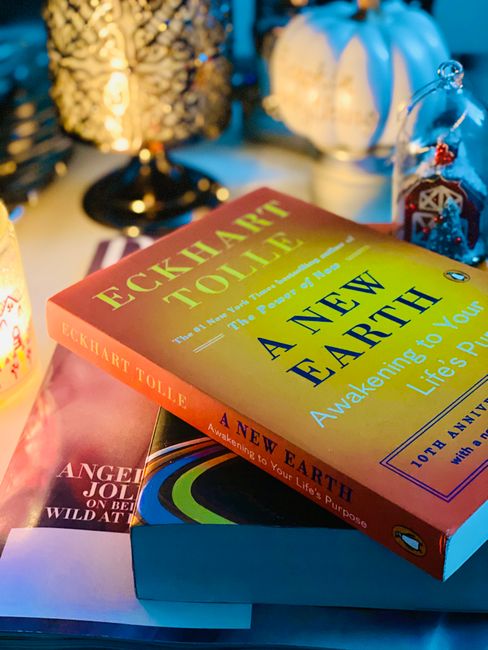

Does your mind ever feel like a runaway train, careening between past regrets and future anxieties, with you just a helpless passenger? For many, this isn’t an occasional feeling but a constant state of being. We get trapped in loops of worry, rehearse difficult conversations that may never happen, and relive painful memories. Eckhart Tolle’s groundbreaking work, The Power of Now, argues that this mental noise isn’t just a nuisance; it’s the primary obstacle to genuine happiness and peace. The book offers not just a diagnosis of this condition but a practical escape plan from the prison of our own minds.
Tolle’s philosophy hinges on identifying the internal forces that create our suffering. He personifies these not as complex psychological disorders, but as fundamental patterns of consciousness that, once recognized, lose their power over us.
For those looking to take the next step, Heal your past, design your future is a resource worth exploring.

For those looking to take the next step, Become an Ultimate Master of your life is a resource worth exploring.
Imagine a narrator in your head that never shuts up. It judges everything, compares you to others, complains about your circumstances, and defines you by your past mistakes and future ambitions. This, Tolle explains, is the ego. It’s a false self, constructed entirely from thought. It thrives on conflict and drama because these things reinforce its sense of identity. When you find yourself stewing over a minor slight from a coworker for hours, that’s the ego feeding itself. Tolle’s first crucial step is to learn to listen to this voice as a detached observer. In that moment of observation, you realize a profound truth: if you can observe the thinker, you cannot be the thinker. You are the awareness behind it.
Have you ever had a disproportionate emotional reaction to a seemingly small event? This is the work of what Tolle calls the ‘pain-body’—an accumulation of every negative emotion you’ve ever experienced and not fully processed. It lies dormant most of the time but awakens when triggered, seeking more pain to feed on. It’s why a simple comment can unleash a torrent of anger or sadness. The pain-body hijacks your mind, forcing you to see the world through its negative filter. The key to disarming it is not to fight it, but to bring conscious, accepting attention to the emotion you feel in your body without letting it become a story in your head. By observing it without judgment, you cut off its food supply and it begins to dissolve.
If the mind’s obsession with past and future is the prison, then the present moment is the key to liberation. Tolle makes a critical distinction between practical ‘clock time’ (planning your day) and destructive ‘psychological time’ (obsessing over what was or what might be). True freedom is found by collapsing psychological time and grounding yourself in the only reality that ever exists: the Now.
Ultimately, The Power of Now is a guide to shifting your entire identity. It’s a journey from being a person defined by the contents of their mind—their stories, their problems, their history—to being the conscious presence that lies beneath. It teaches that peace isn’t something you achieve in the future; it’s something you access in the present by stepping out of the stream of compulsive thinking. By unmasking the ego and pain-body and anchoring yourself in the Now, you can escape the mental prison and discover a life of profound calm, clarity, and aliveness.

 The Power of Now Review: Lessons from Eckhart Tolle’s ClassicGeneral
 The Power of Now Review: Lessons on Presence & Ending SufferingGeneral
 Book Review: The Power of Now Summary & Key LessonsGeneral
 The Power of Now Review: Lessons on Presence & Inner PeaceGeneral
 The Self-Help De-Influence Movement: Beyond Toxic PositivityGeneral
 Kryon: Ancient Prophecy & Humanity’s Next Evolutionary StepGeneralThe Power of Now Review: Lessons from Eckhart Tolle’s ClassicGeneralThe Power of Now Review: Lessons on Presence & Ending SufferingGeneralBook Review: The Power of Now Summary & Key LessonsGeneralThe Power of Now Review: Lessons on Presence & Inner PeaceGeneral
Sign in without leaving this document. You will return here automatically.

The Ultimate Masters
https://www.ultimatemasters.org
Subscribe for one year to access all your favourite downloads
500 / year
Unlimited downloads forever
Unlimited downloads
Subscribe for one to access hundreds of downloads.
50 / month
Subscribe quarterly/per term
75 / month
The Ultimate Masters
https://www.ultimatemasters.org
Continue directly to this store’s secure WooCommerce checkout.
Earn direct and team commission with personal links, campaign creatives, discount coupons and transparent reporting.
0 responses on "The Power of Now Review: Lessons & Summary of Tolle's Classic"