


Annual
Subscribe for one year to access all your favourite downloads
500 / year

For many, the most persistent source of suffering isn’t external circumstance, but an incessant internal narrator. This voice endlessly replays past grievances and rehearses future anxieties, constructing a reality based on memory and projection. Spiritual luminary Eckhart Tolle identifies this stream of compulsive thought as the root of human dysfunction. He argues that we become so identified with this voice—this ‘ego’—that we mistake its stories for our true selves. This mistaken identity is what fuels dissatisfaction, conflict, and a pervasive sense of lack. Tolle’s own early life serves as a powerful case study. Born Ulrich Tölle in post-war Germany, he lived for decades in a state of near-constant anxiety and deep depression, a prisoner to his own mind’s relentless negativity.
The foundation of Tolle’s philosophy is not an intellectual theory but a direct, explosive experience. At the age of 29, while a doctoral student in London, his lifelong depression culminated in a night of unbearable anguish. Overwhelmed by a suicidal thought, a profound separation occurred. He witnessed the ‘self’ that was suffering as an illusionary construct. The intense pressure of his pain forced a total collapse of his egoic identity. In its wake was not a void, but a state of profound, uninterrupted peace. This wasn’t a gradual process; it was a sudden and complete shift in consciousness. For years following this event, he simply existed in this state of blissful stillness before beginning to articulate the insights that would form his life’s work and help millions.
For those looking to take the next step, Heal your past, design your future is a resource worth exploring.
For those looking to take the next step, Become an Ultimate Master of your life is a resource worth exploring.
Tolle’s teachings offer a direct path out of the mind’s prison, not through complex rituals, but through the simple, radical act of embracing the present moment. The goal is to shift from being the thinker to being the awareness behind the thought.
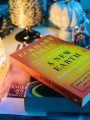
In his later work, particularly A New Earth, Tolle extends this framework from individual salvation to collective evolution. He posits that humanity is at a critical juncture where the dysfunction of the collective ego threatens our very survival through environmental degradation, political conflict, and social division. The required evolutionary leap, he argues, is one of consciousness.
He distinguishes between two life purposes. Our ‘outer purpose’ is what we do in the world—our careers, roles, and goals. However, our ‘inner purpose,’ which is primary, is to be fully present and awake in each moment. When our actions in the world are infused with the stillness and awareness of our inner purpose, they become vehicles for positive change. A doctor who is fully present with a patient does more than just diagnose; they facilitate true healing. An artist creating from a place of stillness channels something beyond personal talent. This, Tolle suggests, is the blueprint for creating a more sane and compassionate world—one person, one present moment at a time.
 The Power of Now Review: Lessons from Eckhart Tolle’s ClassicGeneral
 The Power of Now Review: Lessons on Presence & Ending SufferingGeneral
 Book Review: The Power of Now Summary & Key LessonsGeneral
 The Power of Now Review: Lessons on Presence & Inner PeaceGeneral
 The Self-Help De-Influence Movement: Beyond Toxic PositivityGeneral
 Kryon: Ancient Prophecy & Humanity’s Next Evolutionary StepGeneralThe Power of Now Review: Lessons from Eckhart Tolle’s ClassicGeneralThe Power of Now Review: Lessons on Presence & Ending SufferingGeneralBook Review: The Power of Now Summary & Key LessonsGeneralThe Power of Now Review: Lessons on Presence & Inner PeaceGeneral
Sign in without leaving this document. You will return here automatically.

The Ultimate Masters
https://www.ultimatemasters.org
Subscribe for one year to access all your favourite downloads
500 / year
Unlimited downloads forever
Unlimited downloads
Subscribe for one to access hundreds of downloads.
50 / month
Subscribe quarterly/per term
75 / month
The Ultimate Masters
https://www.ultimatemasters.org
Continue directly to this store’s secure WooCommerce checkout.
Earn direct and team commission with personal links, campaign creatives, discount coupons and transparent reporting.
0 responses on "Eckhart Tolle: Teachings on Presence & Higher Purpose"