
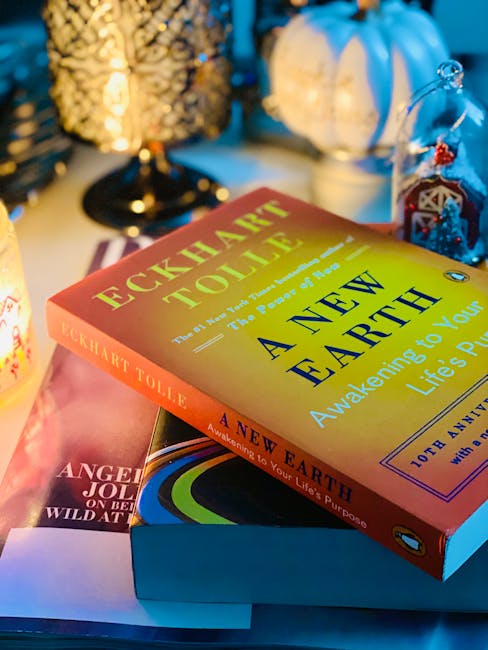

Beyond Recommendations: Book Reviews as Keys to Personal Growth
In our information-saturated age, book reviews often get reduced to mere summaries and superficial ratings. However, a well-crafted review offers far more than a simple ‘thumbs up’ or ‘thumbs down.’ It acts as a guide, illuminating the often-complex terrain of self-help and spiritual literature. It fosters critical thinking, sparks meaningful conversations, and ultimately, empowers us on our journey of self-discovery.
The Book Review: A Mirror Reflecting Our Inner Selves
Think of book reviews as curated experiences. They transcend simple plot recaps and character descriptions, instead delving into the author’s core message and analyzing its relevance to our personal lives and the wider world. For individuals seeking personal growth or spiritual understanding, book reviews become indispensable tools for uncovering new perspectives, challenging ingrained beliefs, and ultimately, deepening their understanding of themselves and their place in the universe.
Each year, countless books flood the market, covering topics ranging from mindfulness and emotional intelligence to philosophical inquiry and the science of happiness. How can we effectively navigate this overwhelming sea of information? This is where the discerning eye of a book reviewer proves invaluable. A thoughtful review doesn’t just tell you what the book is about; it reveals why it matters. It scrutinizes the author’s underlying assumptions, evaluates the evidence presented, and assesses the book’s potential impact on the reader. It helps you determine if the book aligns with your values and goals, such as improving relationships, managing stress, or finding greater purpose.

Deconstructing the Art of a Powerful Self-Help Book Review
What elevates a book review from ordinary to extraordinary, particularly when dealing with self-help or spiritual literature? It moves beyond superficial summaries and explores the work’s deeper implications. Here’s a framework of essential elements:
- Articulated Stance: A compelling review begins with a clear statement of the reviewer’s overall assessment. This should go beyond a simple expression of like or dislike; it should articulate the book’s strengths and weaknesses with precision. For example, instead of saying “I loved it,” a reviewer might state, “While the book offers valuable insights into mindfulness, its lack of practical exercises limits its overall effectiveness.”
- Contextual Understanding: Situating the book within its genre and historical context is vital. How does it compare to other works in the field? Does it offer a fresh perspective, or does it simply reiterate existing concepts? For example, a review of a new book on Stoicism might compare it to classic texts like Marcus Aurelius’s “Meditations” and assess its modern relevance.
- In-Depth Analysis: This is where the reviewer meticulously examines the book’s arguments, evidence, and writing style. Are the author’s claims substantiated? Is the writing clear, engaging, and accessible? Does the book provide actionable advice, and if so, is it realistic and attainable?
- Personal Connection: A truly impactful review incorporates the reviewer’s personal experiences and reflections. How did the book resonate with them on a personal level? Did it challenge their preconceived notions or offer new insights? This adds authenticity and fosters a deeper connection with the reader. For example, a reviewer might share how a particular technique from the book helped them overcome a personal challenge.
Unveiling the Layers: Exploring Profound Themes
Self-help and spiritual books often grapple with complex and profound themes, such as the nature of happiness, the power of resilience, and the search for meaning. A thoughtful review will delve into these themes, examining the author’s approach and evaluating its effectiveness. It will also consider the book’s potential impact on the reader’s personal journey. For example, a review of a book on overcoming adversity might explore the author’s definition of resilience and assess the strategies offered for building mental toughness.
The Ripple Effect: How Book Reviews Impact Readers and Authors
Book reviews wield significant influence in shaping the literary landscape and guiding readers’ choices. For authors, reviews provide invaluable feedback and help them connect with a wider audience. Positive reviews can enhance visibility and credibility, while constructive criticism can inform future work. For readers, reviews act as a compass, helping them navigate the vast world of books and discover works that resonate with their individual needs and aspirations.
Cultivating a Community Through Shared Literary Journeys
Ultimately, book reviews are about more than just evaluating books; they’re about cultivating a community of readers and nurturing a shared passion for learning and self-improvement. By sharing our insights and perspectives, we can help each other discover new possibilities, challenge our assumptions, and deepen our understanding of ourselves and the world around us. So, the next time you encounter a book that inspires you, consider sharing your thoughts through a review. You might be surprised by the positive impact you can have on others.

If you want a practical next step, you can also check out Heal your past, design your future.
If you want a practical next step, you can also check out Become an Ultimate Master of your life.

 The Power of Now Review: Lessons & Summary of Eckhart Tolle’s ClassicGeneral
 The Biology of Belief Review: Lipton’s Key Lessons & SummaryGeneral
 The Power of Now Book Review: Lessons from Eckhart TolleGeneral
 Book Review: The Power of Now — Summary, Lessons & Why It MattersGeneral
 Man’s Search for Meaning: Review, Summary & Key LessonsGeneral
 The Power of Now Review: Lessons & Summary of Tolle’s ClassicGeneral
 Book Review: The Power of Now by Eckhart Tolle — Summary & LessonsGeneral
 Book Review: The Power of Now by Eckhart Tolle — Summary & LessonsGeneral
 Biology of Belief Review: Lipton’s Lessons on Mind Over MatterGeneral
 Book Review: Breaking the Habit of Being Yourself by Joe DispenzaGeneral
- The Power of Now Review: Lessons & Summary of Eckhart Tolle’s ClassicGeneral
- The Biology of Belief Review: Lipton’s Key Lessons & SummaryGeneral
- The Power of Now Book Review: Lessons from Eckhart TolleGeneral
- Book Review: The Power of Now — Summary, Lessons & Why It MattersGeneral
- Man’s Search for Meaning: Review, Summary & Key LessonsGeneral



0 responses on "Book Reviews: A Gateway to Spiritual Exploration and Personal Transformation"