
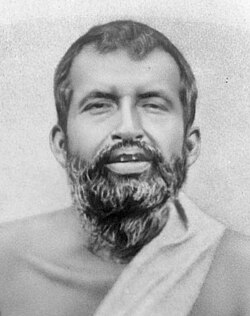

The Science of the Soul: Making Mysticism Practical
When Paramahansa Yogananda arrived in Boston in 1920, he did more than introduce Indian philosophy; he presented a pragmatic methodology for spiritual discovery. His genius lay in framing ancient yogic traditions not as a foreign religion, but as a universal science of consciousness. He taught that God-realization wasn’t a matter of belief, but of direct, personal experience attainable through specific techniques. This scientific approach resonated deeply with the empirical mindset of the West.
The cornerstone of this spiritual science was Kriya Yoga, an advanced pranayama technique of life-force control. Yogananda presented it as a psycho-physiological method to calm the autonomic nervous system, enabling practitioners to interiorize their consciousness and experience deeper states of awareness. This emphasis on tangible practice, learned from his guru Swami Sri Yukteswar Giri, provided a clear, actionable path for seekers weary of dogma.
Creating a Lasting Structure: The Self-Realization Fellowship
A message, no matter how profound, requires a vessel to endure. Yogananda, born Mukunda Lal Ghosh in 1893, understood this implicitly. Shortly after his arrival in America, he founded the Self-Realization Fellowship (SRF) in 1920, creating an organizational structure to protect and disseminate his teachings for generations to come. By establishing an international headquarters in Los Angeles in 1925, he provided a physical and spiritual center for his growing global community.
For those looking to take the next step, Become an Ultimate Master of your life is a resource worth exploring.
For those looking to take the next step, Heal your past, design your future is a resource worth exploring.
This institution was crucial. It offered a systematic way for students to learn through printed lessons, engage in group meditations, and find community in temples and centers. This structured approach ensured the teachings remained consistent and accessible, creating a stable foundation that allowed the spiritual movement to flourish long after its founder’s passing.
The Ultimate Invitation: Crafting a Universal Story
Perhaps Yogananda’s most powerful tool of transmission was his 1946 memoir, Autobiography of a Yogi. More than a simple life story, the book is a masterfully crafted narrative that serves as a compelling introduction to the philosophy of yoga. It demystifies concepts like karma, reincarnation, and the lineage of immortal masters like Mahavatar Babaji by weaving them into an accessible and extraordinary human journey.
The book became a cultural phenomenon, opening the door to Eastern spirituality for countless individuals who might never have attended a lecture or visited a temple. It functioned as a universal invitation, demonstrating that a life of profound spiritual realization was not only possible but also deeply human and attainable.
A Legacy Rooted in Universality
Paramahansa Yogananda’s enduring influence stems from his ability to act as a cultural and spiritual translator. He consistently highlighted the common threads binding the world’s great religions, often drawing parallels between the teachings of Krishna and Christ to illustrate a single, underlying truth. He didn’t ask Westerners to abandon their heritage but to deepen it by understanding the universal laws of spirit. His work laid the essential groundwork for the modern yoga movement, but his true legacy is the principle of self-empowerment—the idea that every individual possesses the tools to scientifically explore the inner kingdoms of the soul.
 The Power of Now Review: Lessons & Summary of Eckhart Tolle’s ClassicGeneral
 The Biology of Belief Review: Lipton’s Key Lessons & SummaryGeneral
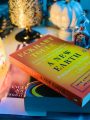 The Power of Now Book Review: Lessons from Eckhart TolleGeneral
 Book Review: The Power of Now — Summary, Lessons & Why It MattersGeneral
 Man’s Search for Meaning: Review, Summary & Key LessonsGeneral
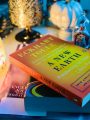 The Power of Now Review: Lessons & Summary of Tolle’s ClassicGeneral
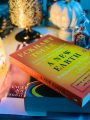 Book Review: The Power of Now by Eckhart Tolle — Summary & LessonsGeneral
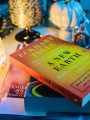 Book Review: The Power of Now by Eckhart Tolle — Summary & LessonsGeneral
 Biology of Belief Review: Lipton’s Lessons on Mind Over MatterGeneral
 Book Review: Breaking the Habit of Being Yourself by Joe DispenzaGeneral
- The Power of Now Review: Lessons & Summary of Eckhart Tolle’s ClassicGeneral
- The Biology of Belief Review: Lipton’s Key Lessons & SummaryGeneral
- The Power of Now Book Review: Lessons from Eckhart TolleGeneral
- Book Review: The Power of Now — Summary, Lessons & Why It MattersGeneral
- Man’s Search for Meaning: Review, Summary & Key LessonsGeneral

0 responses on "Paramahansa Yogananda: Life, Teachings & Global Influence"